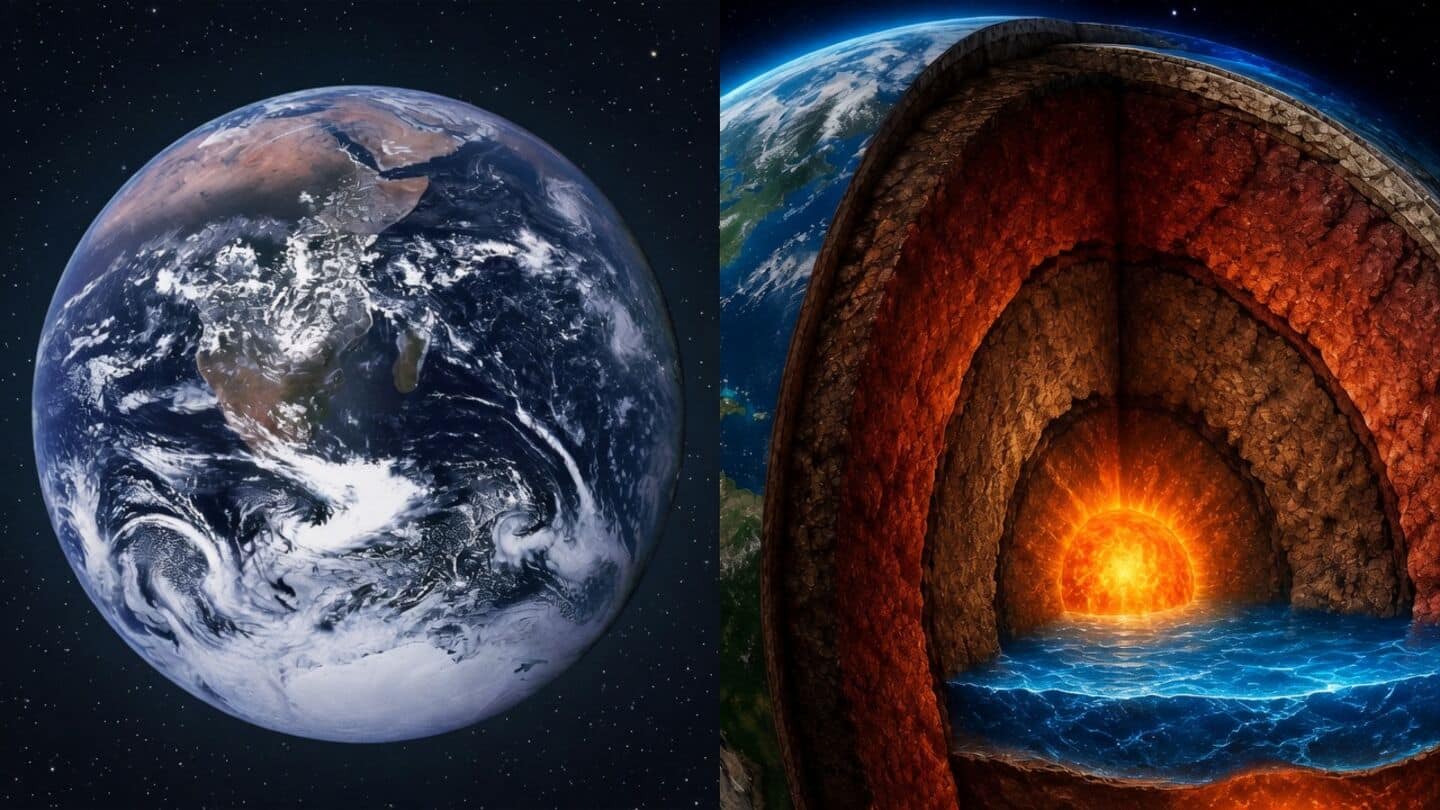
Scientists find core-mantle minerals could hold vast water reserves
Scientists have uncovered evidence that minerals deep inside Earth could store huge amounts of water near where the mantle meets the core (that's about 2,900km down).
This discovery helps explain how our planet stores water deep underground, something that matters for things like plate tectonics and keeping our climate in balance.
It also leaves open longstanding ideas that Earth's water might have come from asteroids or later seeped into the mantle.
Two iron oxyhydroxides can hold water
The team discovered two new minerals, iron oxyhydroxides, that can hold onto large amounts of water even under extreme pressure.
These minerals probably formed when Earth was still cooling down billions of years ago and may slowly release their stored water as mantle material rises and pressure drops, releasing water that eventually rises back toward the surface through volcanoes.
As geoscientist Alfred Wilson from the University of Leeds, who wrote a commentary on the study, put it, the new minerals represent a breakthrough in the mystery of how the Earth obtained and retained its water, but there's still more to learn about exactly how much these minerals can hold and when they'll let it go.