Study finds hierarchical mergers among black holes in 155 pairs
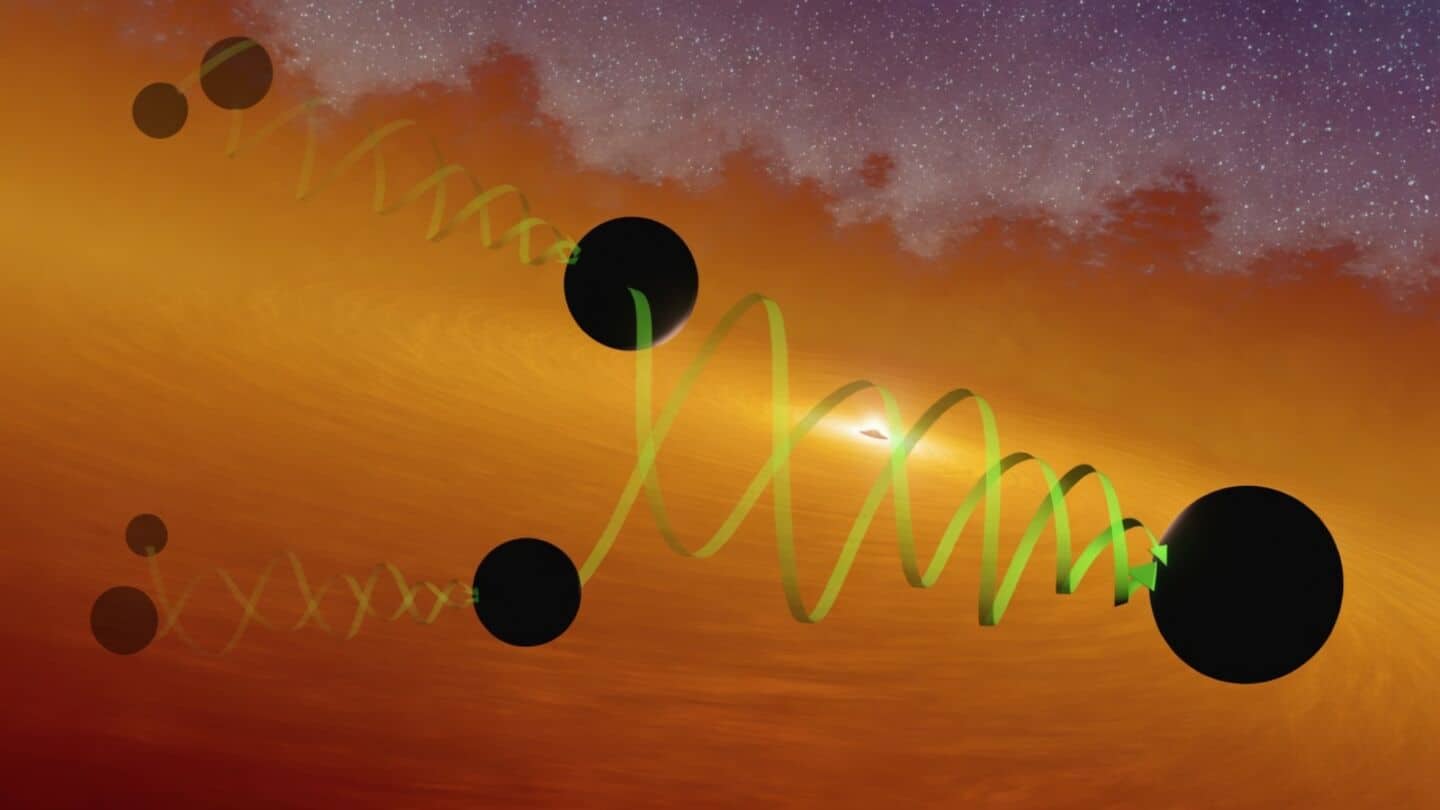
Turns out, not all black holes come straight from dying stars. A recent study described in a July 11, 2026 article found that some black holes are actually the result of smaller black holes merging together, a process called hierarchical mergers.
Researchers looked at data from 155 pairs of colliding black holes spotted by LIGO, Virgo, and KAGRA.
Second generation black holes represent 14%
About 14% of the black holes in these pairs were "second-generation," meaning they're made from earlier mergers instead of just collapsed stars.
Scientists figured this out by spotting a telltale wobble in their orbits and noticing their unusually large masses.
As lead author Cailin Plunkett put it, this shows that black hole formation can be a repeating cycle, especially in crowded star clusters where these cosmic collisions happen more often.