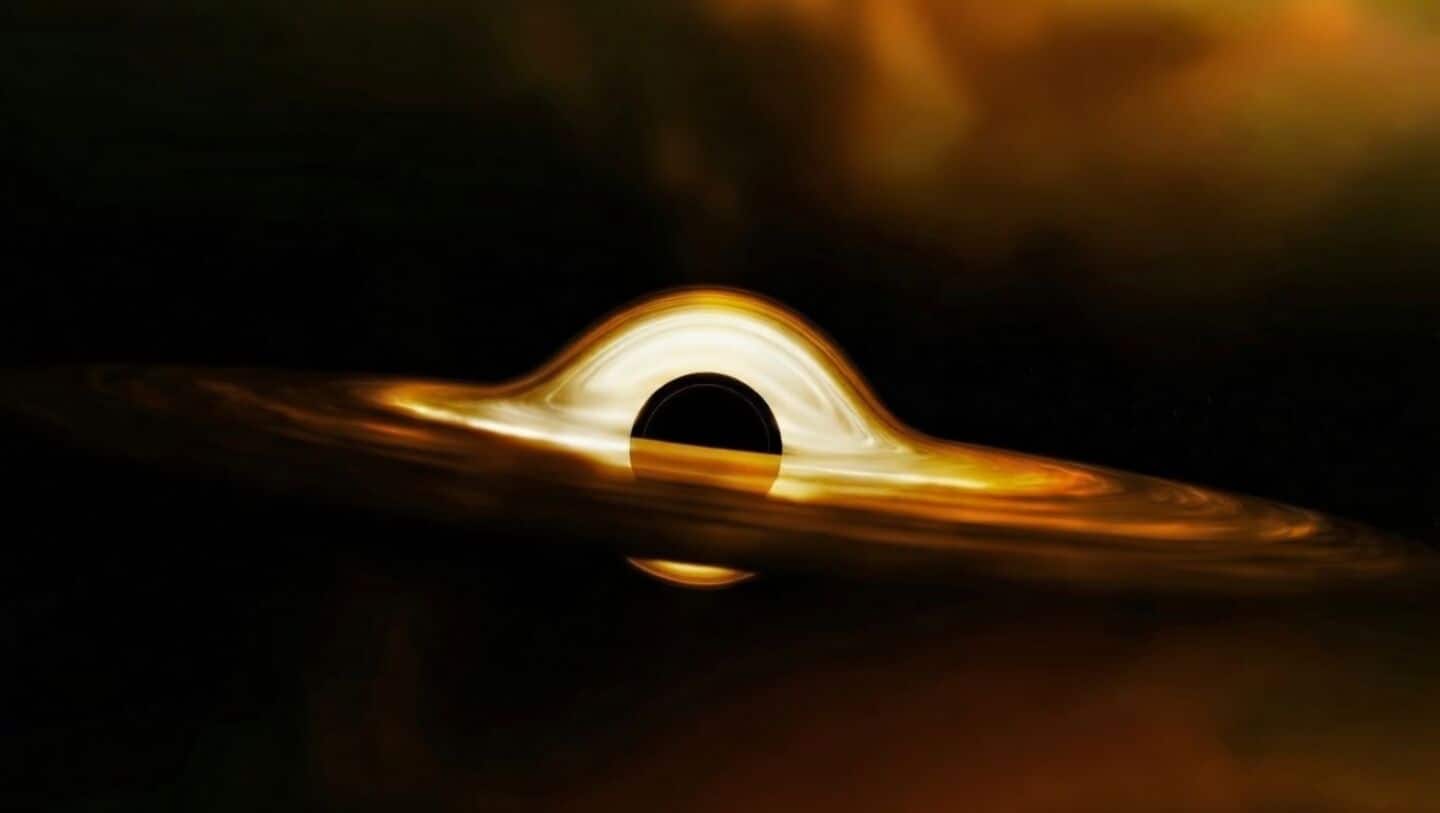
Tiny black holes could explain why universe is not empty
Ever wondered why our universe is made of stuff, and not just empty space?
Nikodem Poplawski of the University of New Haven thinks he might have cracked it.
His new theory suggests that right after the Big Bang, tiny black holes formed and may have swallowed large amounts of antimatter, leaving regular matter behind, explaining why we're all here.
Implications for other cosmological puzzles
Poplawski's idea also offers a fresh take on how supermassive black holes formed so quickly in the early universe - something telescopes like James Webb have spotted.
Unlike traditional theories where black holes come from dying stars, these "primordial" black holes could be much smaller and might have implications for other cosmological puzzles.
If true, this theory could change how we think about what fills our universe.