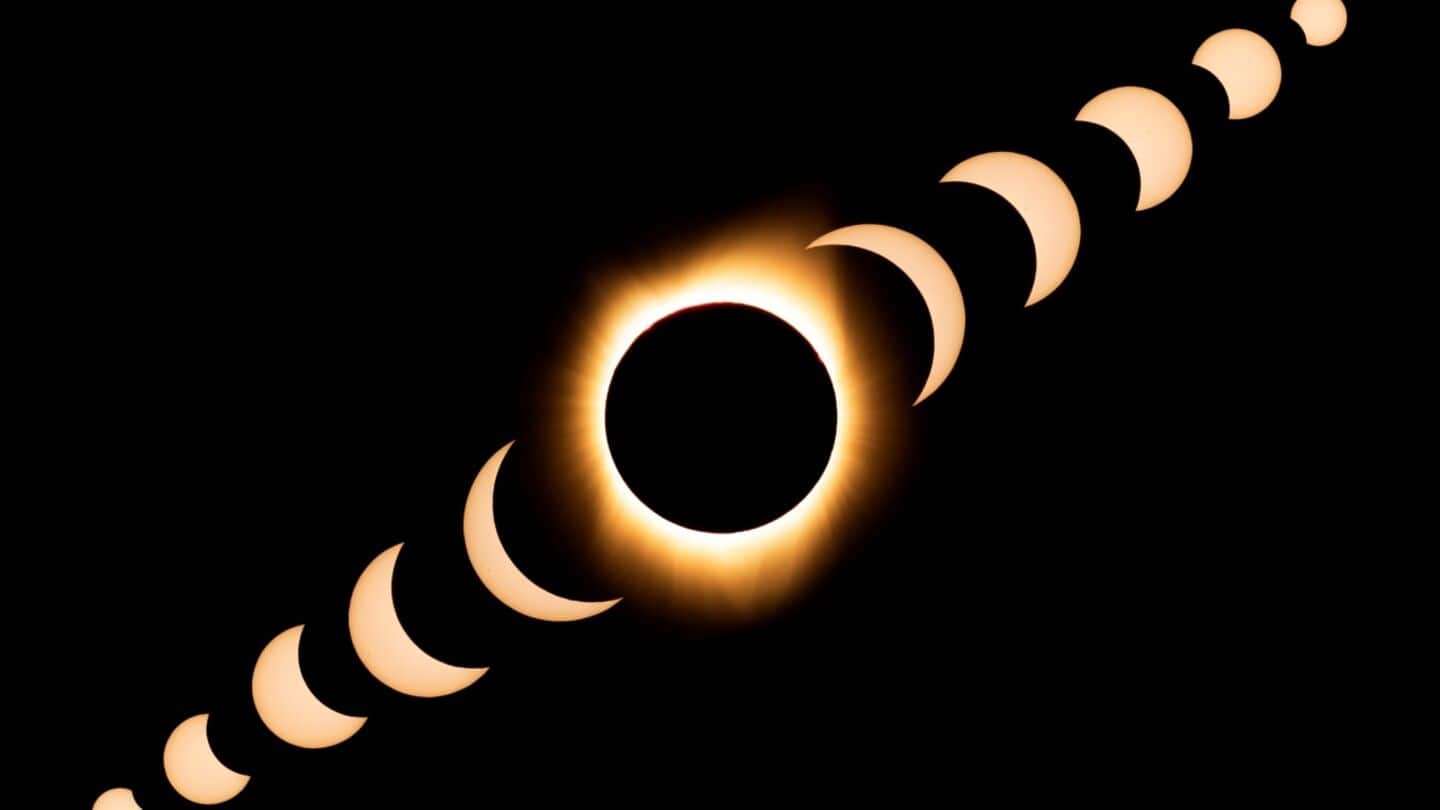
Europe to witness first total solar eclipse in 3 decades
What's the story
On August 12, 2026, Europe will witness its first total solar eclipse in nearly three decades. The last total solar eclipse visible from most of mainland Europe was on August 11, 1999. Since then, only partial eclipses have been seen in the region. This year, the path of totality (where the Sun goes completely dark) will be narrow but cover parts of northern Russia, Greenland, western Iceland, northern Spain, and northeastern Portugal.
Viewing locations
Spain to be most sought-after destination
Spain is expected to be the most sought-after destination for this celestial event, thanks to its well-connected roads and proximity to major cities.
The path of totality will pass through several Spanish cities including Bilbao, Zaragoza, Burgos, Leon, Palencia, Logrono, and A Coruna.
Even outside this path, most of Europe will witness a partial eclipse with over 90% of the Sun covered.
Viewing safety
Solar eclipse viewing tips
Watching a solar eclipse can be an incredible experience, but it also comes with risks.
Looking directly at the Sun without proper eye protection can damage your vision, even if most of it is blocked.
Regular sunglasses or makeshift devices won't do the trick; you need ISO 12312-2 compliant eclipse glasses or dedicated solar viewers.
The only time you can look without protection is during totality, and even then, put your glasses back on as soon as the Sun reappears.
Eclipse details
What is a total solar eclipse?
A total solar eclipse is a rare alignment where the Moon perfectly blocks out the Sun, plunging the world into darkness for a few minutes.
This year, Spain will witness totality after more than a century.
The event is particularly special because it will occur in the evening when the Sun will be low on the horizon for much of Europe, creating a "sunset eclipse" effect.