This planetary system 116 light-years away has left astronomers baffled
What's the story
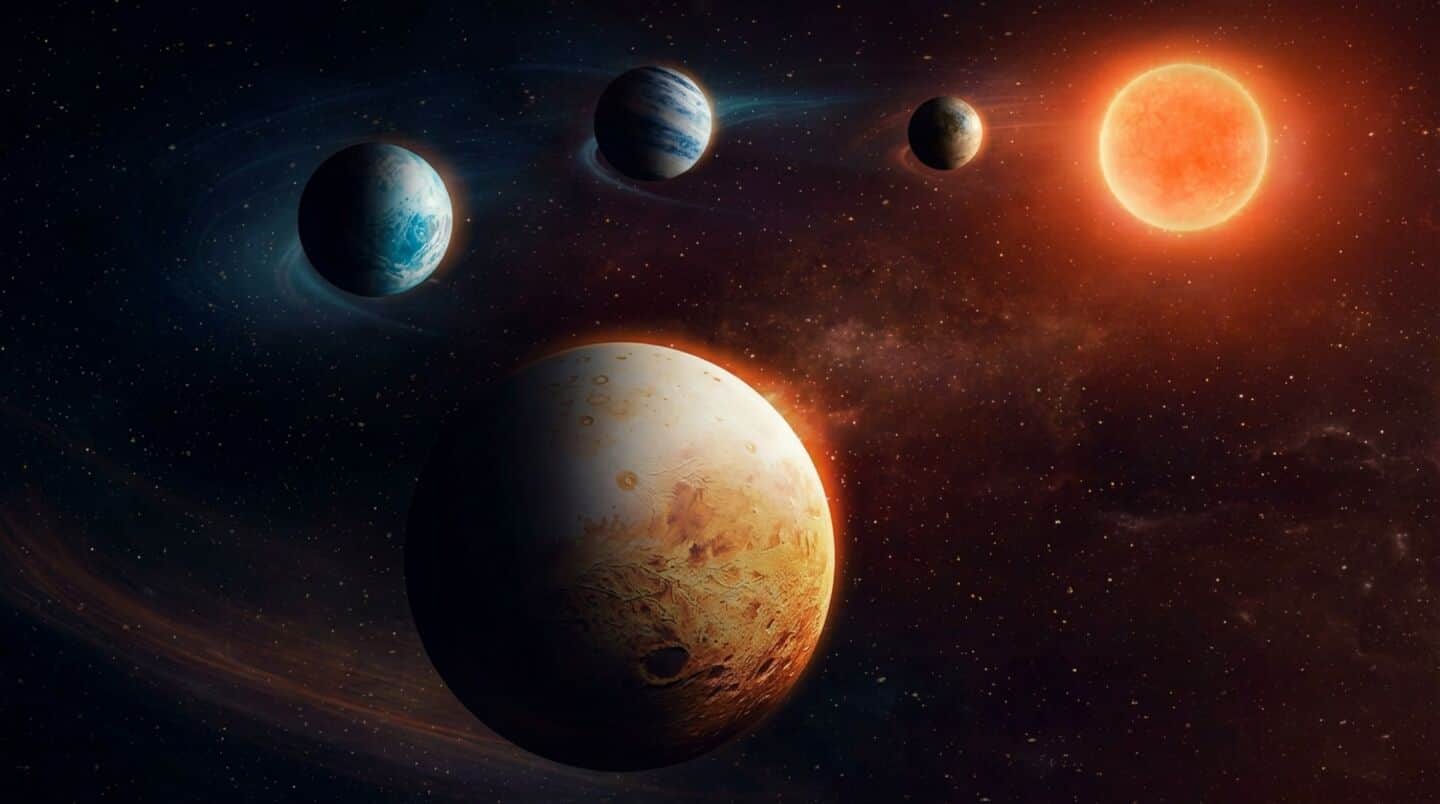
A team of astronomers has discovered an unusual exoplanetary system located some 116 light-years away. The groundbreaking find was made using telescopes from NASA and the European Space Agency (ESA). The system, which revolves around a red dwarf star called LHS 1903, contains four planets in an unusual order. This peculiar arrangement challenges our current understanding of how planets form and evolve.
Planetary sequence
Unconventional arrangement of planets
The LHS 1903 system features a rocky inner planet, two gaseous ones in the middle, and a surprising outermost rocky planet.
This arrangement goes against the widely accepted pattern of rocky planets closer to their star and gas giants farther away.
The discovery raises questions about the formation processes of these planets and their unique characteristics.
Formation debate
Challenges to existing theories
The standard theory of planet formation suggests that rocky planets form close to their star, while gas giants form farther away. However, the LHS 1903 system doesn't fit this model.
The outermost rocky planet, dubbed LHS 1903 e, is a "super Earth" with a radius nearly 1.7 times that of our own planet.
The researchers propose a "gas-depleted" formation mechanism where the planets formed one after another in reverse order to our solar system.
Planetary evolution
Insights into planet formation
The researchers believe that LHS 1903 e formed later than the other planets in its system, possibly in a region with little gas.
This could explain why it is rocky despite being far from its star.
The discovery of this unusual planetary system offers valuable insights into the complexities of planet formation and evolution around red dwarf stars, which are the most common type of star in our galaxy.
Research implications
Future of planetary research
The four-planet LHS 1903 system serves as a natural laboratory for studying how small planets form and evolve around stars different from our own.
Future observations could help scientists study their atmospheres and learn more about the formation and evolution of different types of planets.
The discovery challenges existing models of planetary formation, making it an exciting area for further research in the field.