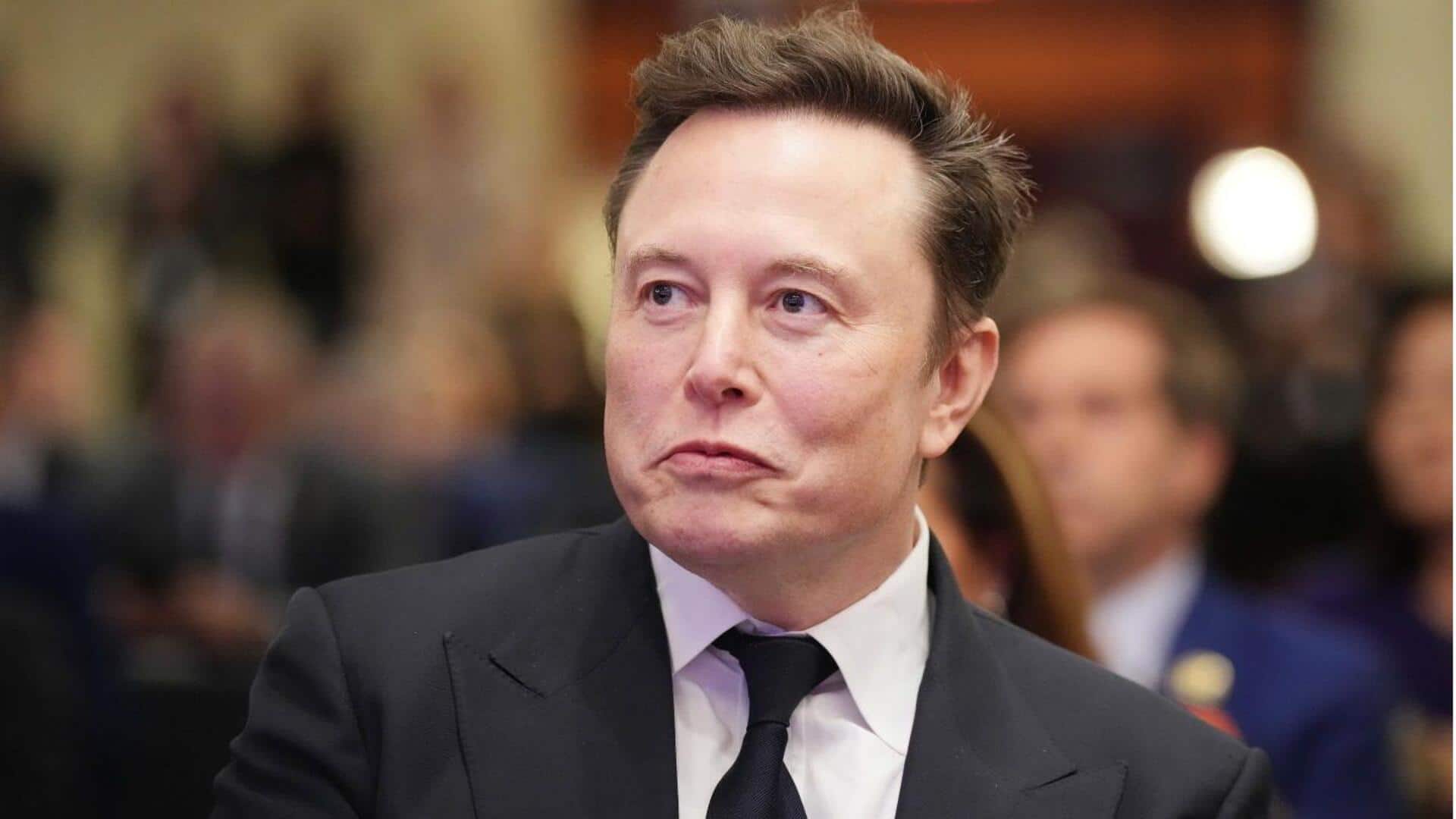
Why UK's Royal Society has not revoked Elon Musk's fellowship
What's the story
Paul Nurse, the President of the UK's Royal Society, has defended the academy's decision not to take action against tech billionaire Elon Musk. The defense comes despite allegations that Musk violated the society's code of conduct by supporting cuts to US research funding as part of the Department of Government Efficiency (DOGE). Nurse said that fellows should only be expelled for fraud or other serious research defects.
Code review
Nurse suggests review of code of conduct
Nurse, who took over as the society's president for a second time last month, said that the code of conduct might need to be reviewed. He said, "We elect people for scientific achievement or delivery. And therefore my view is that we get rid of them if that turns out to be false or not correct." This statement indicates a possible reconsideration of the society's standards and practices.
AI controversy
Musk's fellowship faces new scrutiny over AI tool
Musk's fellowship has come under fresh scrutiny after it was revealed that his Grok AI tool on X can digitally remove clothing from images, including those of women and children. Some fellows have backed Nurse's stance, with Nobel laureate Professor Andre Geim saying expulsion is just "theater" and that even brilliant scientists can be awful people. He argued that focus should be on defending conditions for science in Britain rather than getting caught up in low-impact rows like this one.
Mixed reactions
Support and criticism for defense of Musk
Professor Frances Arnold, a Nobel laureate in chemical engineering, backed Nurse's defense. She said "widespread dislike of Musk's positions and behavior is not a basis for ejection." However, other fellows have disagreed with this view. One fellow said Nurse's comments discredited the society and mocked its code of conduct. They argued that if Musk's activities at DOGE and his AI tool aren't bringing science into disrepute, then what is.
Accountability demands
Calls for accountability and adherence to code of conduct
Another fellow stressed that "fellowship isn't lifetime immunity" and scientific institutions must hold members accountable for behavior that damages public trust in science. Professor Peter Somogyi also criticized Musk, including his support for violent societal change. The wider scientific community has also pushed back against Nurse's defense. Professor Rachel Oliver from the University of Cambridge wrote to him, stressing the importance of codes of conduct clearly stating sexual harassment is unethical and will not be tolerated.