Russia backs India's bid for UNSC permanent seat
What's the story
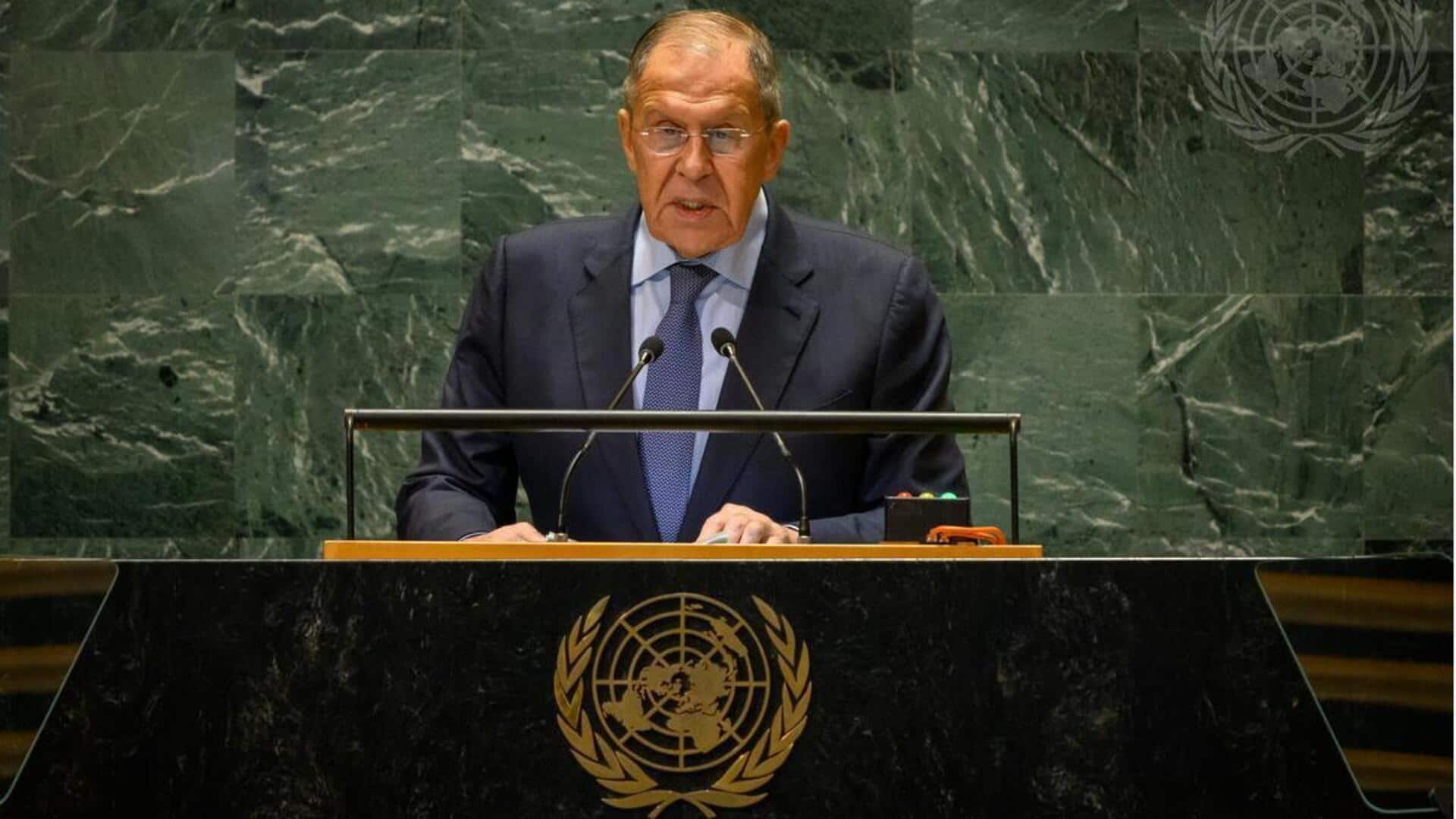
Russia has backed India's bid for a permanent seat on the United Nations Security Council (UNSC). Foreign Minister Sergey Lavrov made the announcement during his speech at the 81st United Nations General Assembly in New York on Saturday. He also spoke about increasing representation from Asia, Africa, and Latin America on the UNSC. "We are in favour of broadening the representation of Asia, Africa, and Latin America," he said.
Cautionary stance
Lavrov cautioned against giving more seats to Western countries
Lavrov cautioned against giving more seats to Western countries, specifically Germany and Japan.
"UN Security Council reform cannot involve any additional seats being allocated to Western countries, especially to Germany and Japan, who are now on the path to militarism and revanchism," Lavrov stated.
The Russian minister stressed that any reform of the UNSC should not compromise the prerogatives or powers of its existing permanent members.
Endorsements received
Mauritius backs India's UNSC bid
Mauritius Foreign Minister Dhananjay Ramful also backed India's candidature during his speech at the UNGA.
He stressed India's constructive role in global affairs and supported G4 (coalition of Brazil, Germany, India, and Japan to mutually support each other's bids for permanent seats in the UNSC) and L.69 positions on Council reform.
The L.69 coalition consists of developing nations from Africa, Latin America and the Caribbean, Asia, and the Pacific that aims to reform the United Nations Security Council (UNSC).
Collective backing
Support from BRICS nations, Marshall Islands
Portuguese Prime Minister Luis Montenegro called for a more representative Security Council with permanent representation for Africa, Brazil, and India.
The BRICS nations had earlier reiterated their support for Brazil's and India's aspirations to play a larger role in the UN.
The Marshall Islands also supported the G4 alliance, with President Hilda Heine backing Japan's bid for permanent membership.
Reform process
Reforming UNSC requires two-thirds majority in the General Assembly
Japanese Prime Minister Sanae Takaichi called for urgent reform of the Council without naming individual candidates from G4.
Reforming the UNSC requires a two-thirds majority in the General Assembly and ratification by two-thirds of member states, including all five permanent members.
While Russia continues to support India's bid, formal reform remains stalled due to mixed views among other permanent members.