Sri Lanka uses drone to fight worst dengue outbreak
What's the story
Sri Lanka is facing its worst dengue outbreak in nearly a decade, with over 77,000 infections and 56 deaths this year. To identify stagnant water sources that serve as mosquito breeding grounds, the government has enlisted military drones to scan rooftops of homes, schools and construction sites and deployed police officers to go to people's homes for physical inspections. The outbreak is largely concentrated in urban areas like Colombo, the capital city.
Government action
Response to the outbreak
So far, Sri Lanka's government has cleared nearly 11,000 mosquito breeding sites and fined over 4,000 premises.
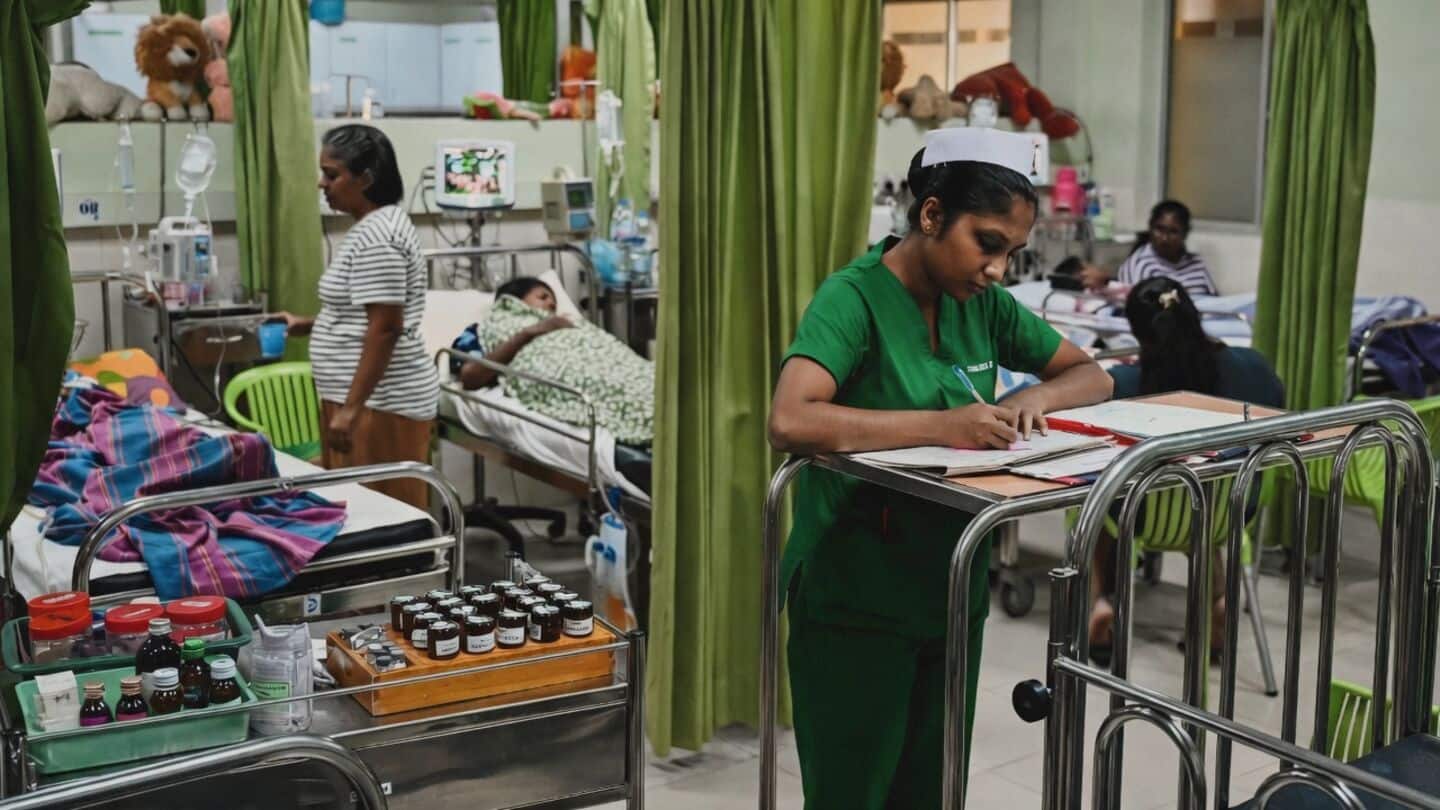
Hospitals have increased capacity and extended hours to handle the surge in patients.
The National Dengue Control Unit's Kapila Kannangara said "the number of patients is high, and the severity of the cases is high," with about 75% linked to a more virulent strain.
Disease details
What is dengue fever?
Sri Lanka's health officials blame the rise in dengue infections on a cyclone that ripped through the island last December, scattering debris that has become new breeding grounds for mosquitos.
Dengue fever is a viral disease transmitted by Aedes mosquitoes, which breed in stagnant water.
Symptoms include high fever, headache, muscle pain, nausea, and rashes. Severe cases can lead to internal bleeding or death.
Disease prevention
These mosquitos now moving into new areas, including Europe
While dengue fever is common in tropical climates, with rising temperatures worldwide, these mosquitos are now moving into new areas, including Europe and the Mediterranean.
The World Health Organization reported a dramatic increase in global dengue cases from around 500,000 in 2000 to 14.4 million in 2024 due to rising temperatures and changing climates.
Cylone
Global incidence of dengue has increased 30-fold
The global incidence of dengue has increased 30-fold over the past five decades, making it one of the top 10 global health threats, the WHO said. Nearly half of the world's population is now at risk.
Because there is no universal dengue vaccine, pain relief medications such as paracetamol are often used. Patients who develop severe symptoms frequently require close monitoring in the hospital, since complications can be fatal.