5 traditional Dussehra dishes and their significance
What's the story
Dussehra, also known as Vijayadashami, will be celebrated on October 20 this year. The festival marks the triumph of good over evil and is observed with cultural celebrations across India. But beyond the festivities, food also plays a major role in conveying the essence of this occasion. Families prepare and share traditional dishes that are considered auspicious for their taste and symbolism of prosperity, gratitude, and harmony.
Cultural significance
Cultural significance of food on Dussehra
Many of these traditional dishes are deeply rooted in agricultural traditions, using seasonal harvests like jaggery, gram, sugarcane, and lentils.
They highlight the importance of simplicity and neighborhood bonding that has been passed down through generations.
Each dish, whether it's puran poli or sundal, carries cultural significance and connects to the land and its yield.
These foods make Dussehra a celebration of heritage and togetherness.
Dish details
Puran poli
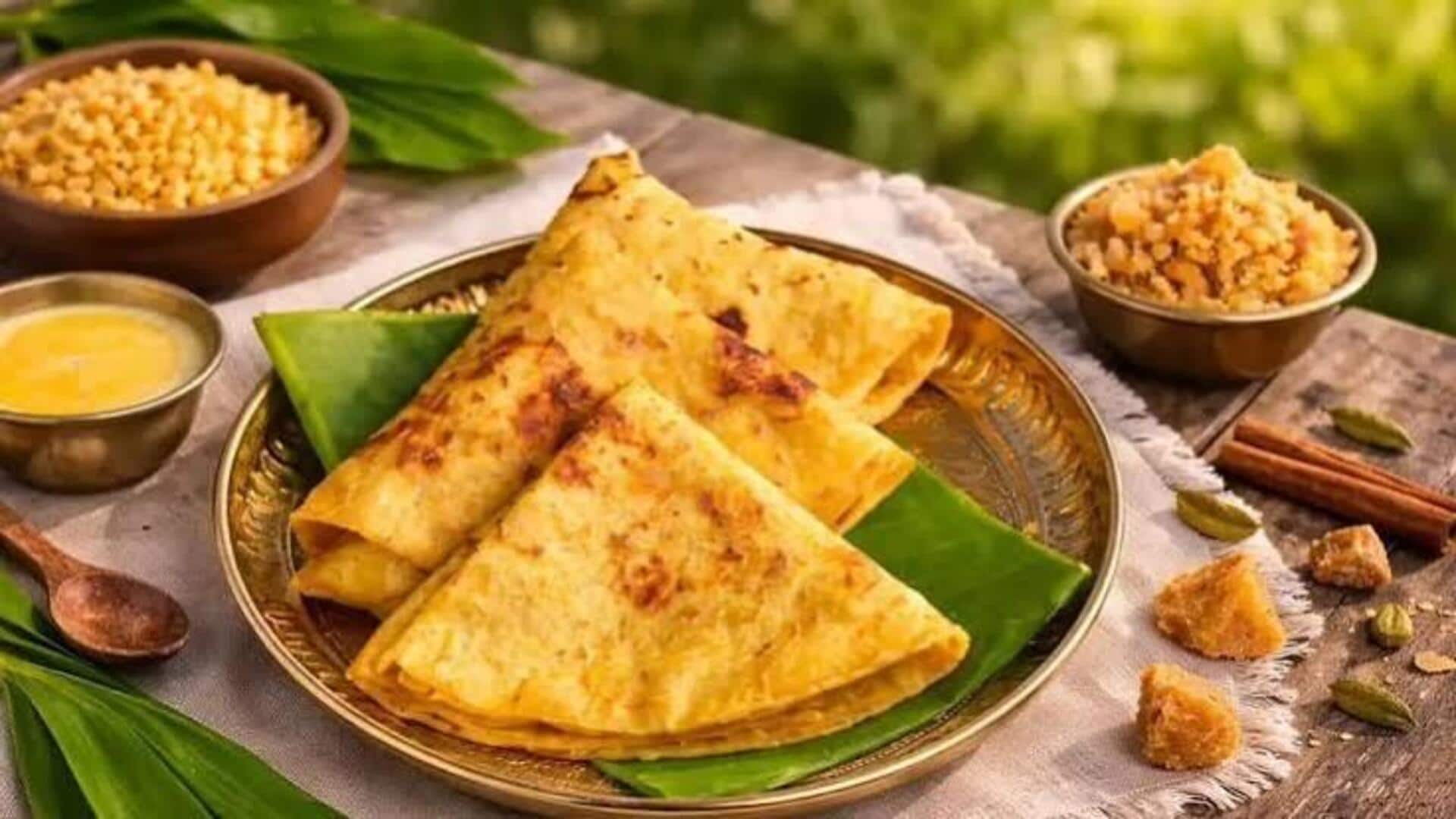
Puran poli, a traditional dish from Maharashtra and Karnataka, is made by stuffing jaggery and chana dal in a poori (flatbread).
Its golden color symbolizes wealth and good fortune.
Offering puran poli to loved ones reflects the spirit of sharing abundance after the victory of good over evil.
This dish is more than just festive food; it is a cultural expression of gratitude for nature's reward.
Culinary tradition
Sundal
Sundal, a South Indian dish made with boiled chickpeas or green gram seasoned with coconut and spices, is a staple offering during Navratri and Dussehra.
This dish is often distributed as prasad in many temples.
High in nutritional value and easy to make, sundal connects back to traditional diets based on legumes.
Sharing sundal illustrates the cultural value of community, showing the importance of balanced plant-based foods in our daily lives.
Harvest celebration
Gud and chana
The practice of eating gud and chana on Dussehra is a long-respected ritual in many parts of India.
This combination celebrates the harvest season and the idea that simple, natural foods can help sustain life.
Sharing gud-chana reflects harmony and goodwill.
This practice ties people to age-old traditions, emphasizing that wealth is not only about money but also about sharing nourishing foods with our loved ones and caring about their health and well-being.
Harvest season
Fafda and jalebi
Fafda and jalebi are popular Gujarati treats traditionally enjoyed during Dussehra.
Fafda is a crispy, golden snack with a savory taste, while jalebi is sweet and syrupy.
Together, they make a delicious combination of sweet and savory flavors.
Eating these treats during Dussehra is linked to the harvest season and symbolizes prosperity, happiness, and celebration.
Sweet treat
Kesari
Kesari, or saffron halwa, is a rich dessert made by combining semolina (suji or rava), sugar, ghee, and saffron.
Its bright orange-gold shade indicates the auspiciousness of the festivity and the victory of light over darkness.
Prepared particularly during Dussehra across South India, it is also offered as prasad in many temples.
Sharing kesari during festivities displays joy, love, and the cultural significance of sweets as a medium of spreading positivity.
Nature's bounty
Sugarcane and seasonal fruits
In many parts of India, sugarcane and seasonal fruits are considered auspicious foods during Dussehra.
These offerings symbolize fertility, wealth, and the blessings of a good harvest.
Offering these to the almighty and then distributing among loved ones symbolizes gratitude toward nature and its bounty.
Sugarcane represents growth and stability, while fruits define health and abundance.