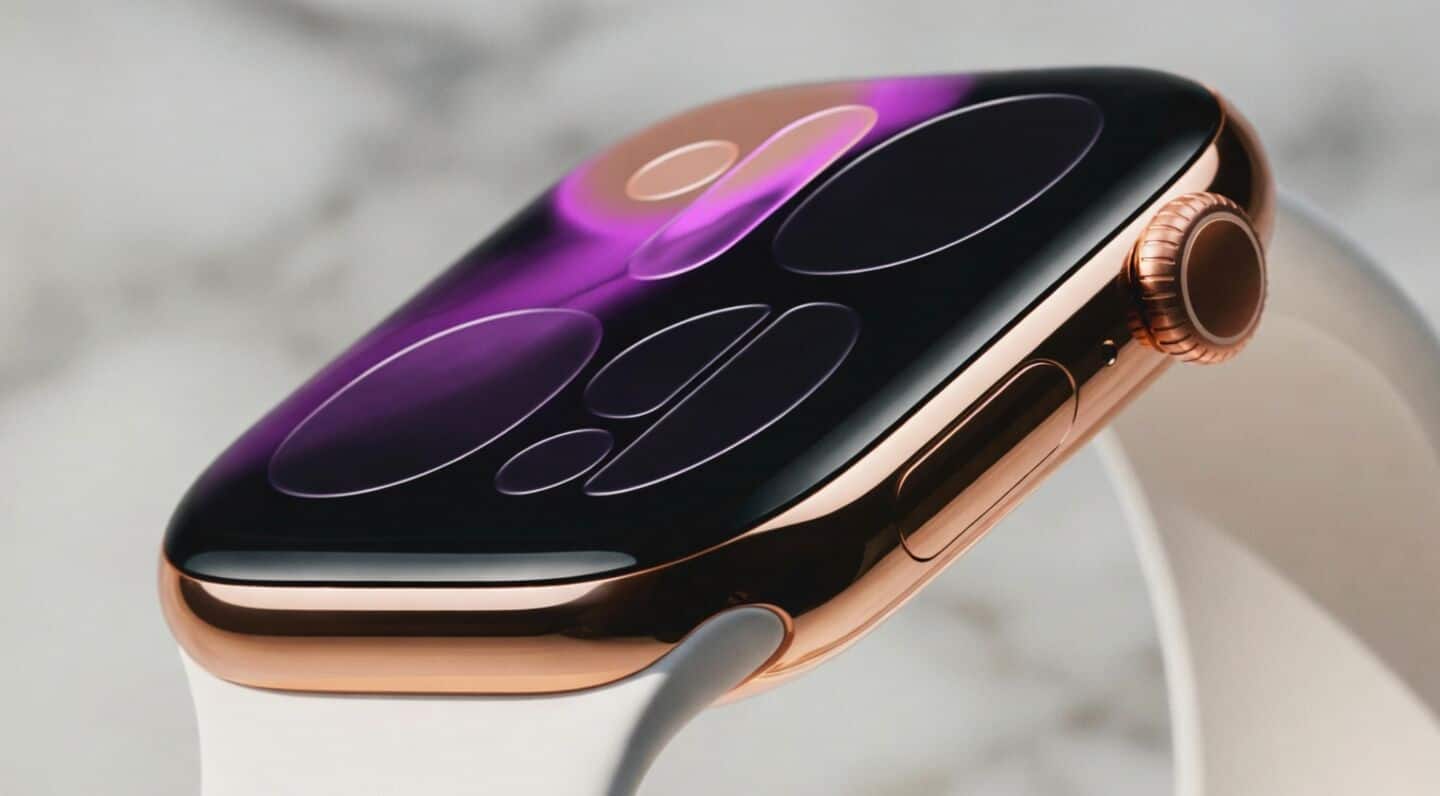
Apple dominates AI smartwatch market, accounting for nearly 90%
What's the story
Apple has taken the lead in the artificial intelligence (AI) smartwatch market, accounting for nearly 90% of all Edge AI-capable smartwatch shipments in Q1 2026. The data comes from Counterpoint Research, which also noted a massive year-over-year (YoY) growth of 70% in Edge AI adoption across the wider smartwatch industry. This surge shows that more brands are integrating advanced AI technology into their devices.
Technology explained
What is Edge AI?
Edge AI is a form of artificial intelligence that runs on a device's own chip, instead of being processed on remote servers.
On the Apple Watch, this means its Neural Engine can perform tasks like irregular heartbeat detection or fall detection in real-time, without sending data to an iPhone or cloud first.
Anshika Jain, Principal Analyst at Counterpoint Research, said, "Brands have been continuously upgrading their smartwatch hardware to make devices more AI-capable."
Application focus
Health and fitness tracking primary application
The primary application of Edge AI in smartwatches is health and fitness tracking.
Counterpoint's data shows a significant increase in blood pressure monitoring shipments and sleep apnea detection year over year. This suggests that brands are now looking to expand their capabilities into areas like diabetes detection.
Apple's early adoption of this technology can be traced back to 2023 with the introduction of the S9 chip with a four-core Neural Engine specifically designed for on-device machine learning in Apple Watch.
Market competition
Other players in the market
Huawei followed Apple's lead in 2025 with its own Kirin W80 chip for powering its "Celia" voice assistant locally.
Qualcomm is also entering the market this year with its Snapdragon Wear Elite platform.
Google is said to be preparing a Tensor-based wearable chip but has yet to launch it.
Counterpoint also notes an emerging software-driven alternative to dedicated NPUs, Ambiq's Apollo platform, which runs AI inference on vector-core silicon via Arm's Helium extensions instead of purpose-built neural hardware.