Why astronomers are celebrating cancellation of Chile's $10B hydrogen plant
What's the story
The scientific community is breathing a sigh of relief as plans for a $10 billion green hydrogen and ammonia production facility in Chile's Atacama Desert have been scrapped. The proposed 3,000-hectare facility, called INNA, included a port, transport links to the coast, and three solar power plants. It had been under review by Chile's environmental regulator for nearly a year.
Astronomical concerns
Astronomers' long battle
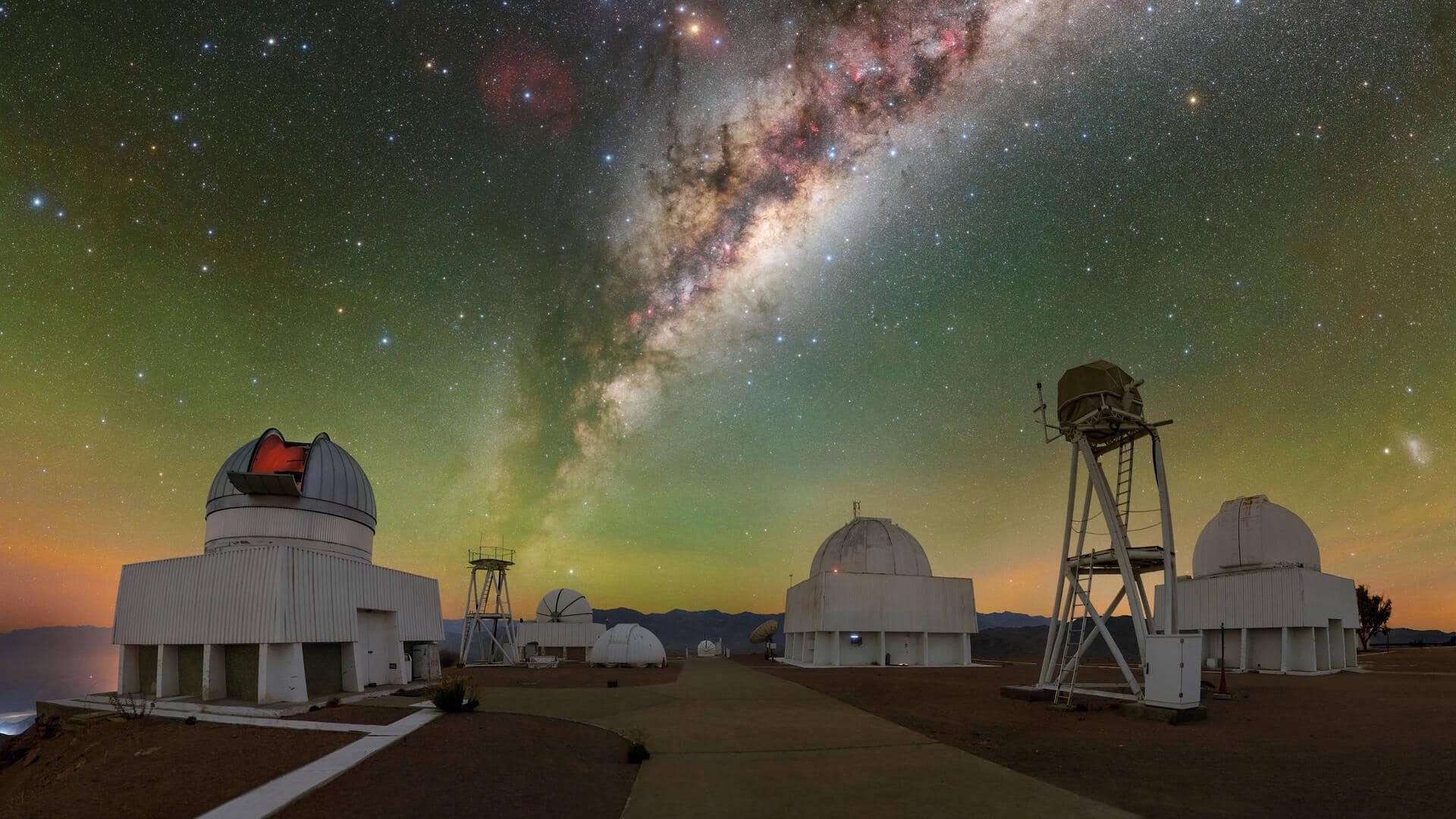
Astronomers had long warned that the INNA facility's proximity to some of the world's most powerful telescopes would have irreparably damaged observations.
The Atacama Desert is considered the best location on Earth for ground-based astronomy.
Itziar de Gregorio, a representative from the European Southern Observatory (ESO) in Chile, welcomed the cancellation decision.
"This cancellation means that the INNA project will no longer have a negative impact on the Paranal Observatory," he said.
Future safeguards
Need for protective measures
De Gregorio further emphasized the need for protective measures around professional astronomy sites in Chile.
He said, "This cancellation does not mean that the work to protect the skies is over."
The facility was expected to increase light pollution, cause tiny vibrations in the earth affecting instruments, aerialise dust settling on precision telescope mirrors, and increase atmospheric turbulence.
Project withdrawal
AES Andes withdraws project
The withdrawal of the INNA project comes after meetings last week between Chile's environmental evaluation service and AES Andes, the company that proposed the facility.
In a press release, AES Andes said it had decided to cease execution of the INNA project after detailed analysis of its portfolio.
However, they also claimed that their other activities in the area are "absolutely compatible" with each other.