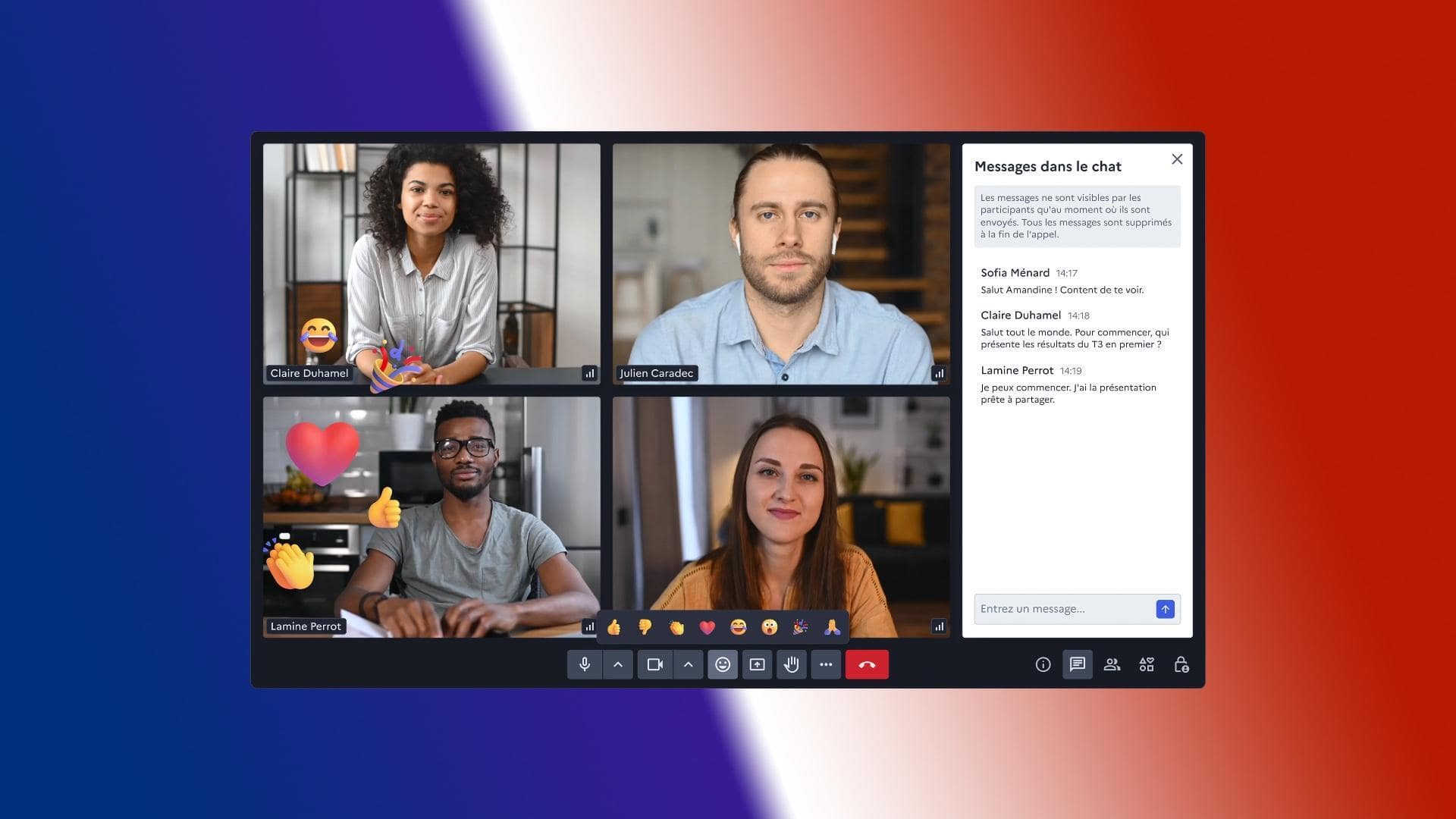
France ditches Zoom, Teams for homegrown video conferencing app
What's the story
The French government has announced its plan to replace Microsoft Teams and Zoom with a domestically developed video conferencing platform called Visio. The transition will be completed by 2027 across all state administrations. The move is part of France's strategy to regain control over critical digital infrastructure and reduce dependence on foreign software vendors, especially those from the US.
Platform development
Visio: A product of French innovation
Visio, which has been in testing for a year, already has more than 40,000 regular users. The platform is now being deployed to 200,000 public agents.
Major institutions like the CNRS (National Center for Scientific Research), Ministry of Armed Forces, Assurance Maladie and General Directorate of Public Finances (DGFiP) will be among the first to adopt it in early 2026.
Digital tools
Visio: Part of a larger digital ecosystem
Visio is part of the Suite Numerique, a wider digital ecosystem of sovereign tools designed to replace popular services such as Google Meet, Slack and Gmail in the French public sector.
These tools can only be accessed via ProConnect, a secure authentication system for public servants. They are not available for the general public or private companies.
Platform features
Visio's technical specifications and future enhancements
Visio is hosted on Outscale's sovereign cloud infrastructure, a subsidiary of Dassault Systemes. It has been certified under SecNumCloud by ANSSI, France's national cybersecurity agency.
The platform also offers AI-powered meeting transcription with speaker diarization technology from French startup pyannote.
Real-time subtitle generation from AI research lab Kyutai is expected to be integrated by summer 2026.
Financial impact
Cost savings and digital sovereignty
The shift to Visio is also expected to cut licensing costs. The French government estimates savings of €1 million per year for every 100,000 users moved away from paid services like Microsoft 365 and Zoom.
This strategy highlights France's commitment to digital sovereignty amid rising geopolitical tensions and fears of foreign surveillance or service disruptions.