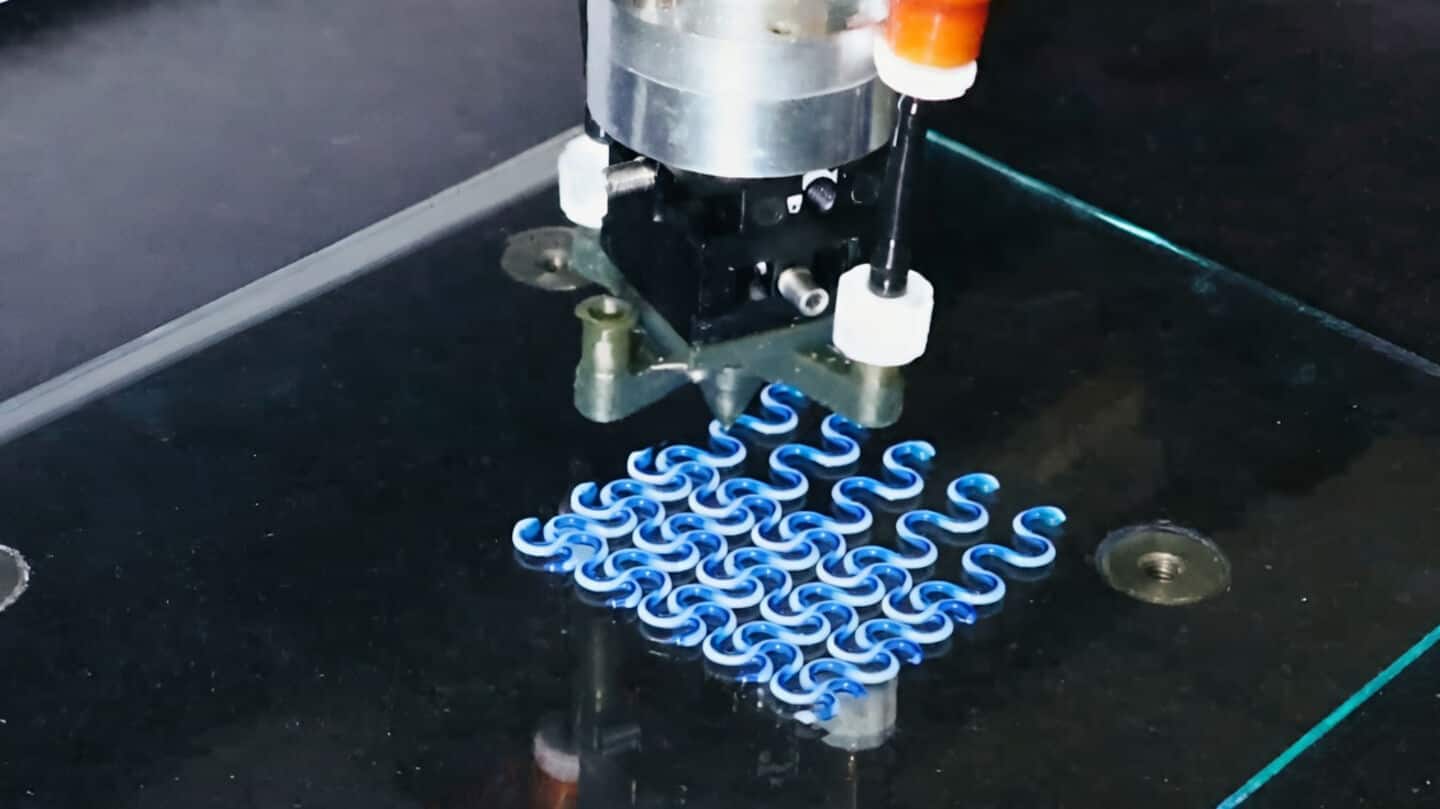
Harvard engineers 3D print moving muscle filaments for lifelike robots
Harvard engineers have created a new way to 3-D print "muscle" filaments that actually move and flex, making robots much more lifelike.
Instead of relying on stiff, clunky parts, these new materials let robots bend, twist, and even grip objects more smoothly, kind of like how real muscles work.
Heat driven grippers face efficiency challenge
The secret is in an active liquid crystal elastomer and a passive elastomer: some contract when heated, while others hold their shape.
These were shown off in demos where soft robot grippers could pick things up or flat shapes popped into domes with a little heat.
While this could mean big things for future robots and medical devices, the tech still needs work. Right now it depends on heat to function, and its energy efficiency remains a challenge.