Indian researchers discover Milky Way-like galaxy from early universe
What's the story
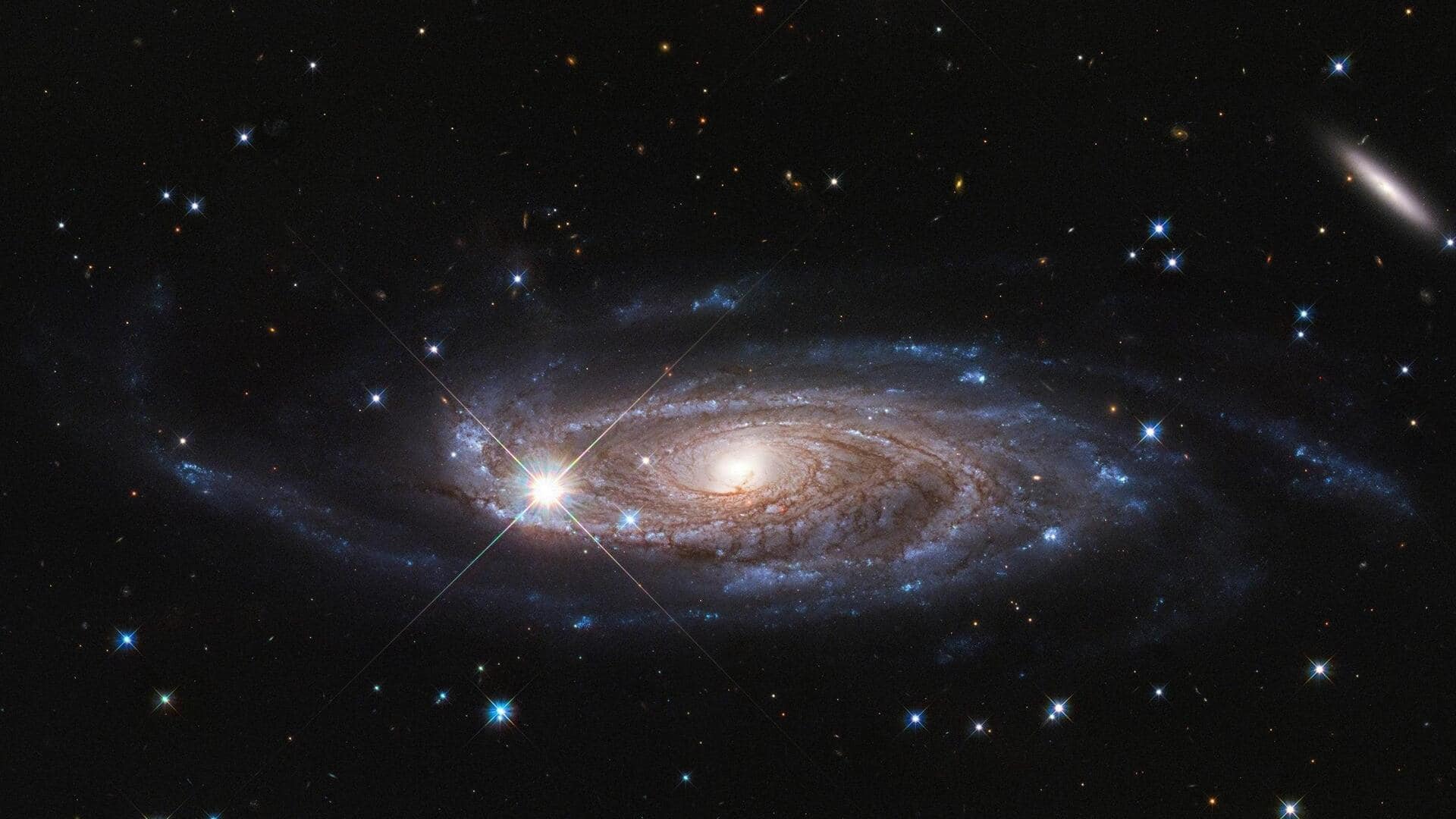
Indian astronomers at Pune's National Center for Radio Astrophysics (NCRA-TIFR) have discovered a massive galaxy that existed when the universe was just 1.5 billion years old. The find is one of the earliest observations of such a well-defined spiral structure, closely resembling our own Milky Way. The discovery challenges current theories about how galaxies formed in the early universe and suggests that sophisticated structures were being built much earlier than previously thought possible.
Galaxy characteristics
Alaknanda's unique structure and formation
The researchers have named the newly discovered galaxy Alaknanda, after a sister river of the Mandakini, which is also the Hindi name for the Milky Way.
Rashi Jain, a PhD student who led the research under Professor Yogesh Wadadekar, said that Alaknanda looks remarkably similar to our own Milky Way despite being present when the universe was only 10% of its current age.
Research impact
Alaknanda's discovery and implications
The discovery of Alaknanda was made using NASA's James Webb Space Telescope (JWST), the most advanced observational instrument ever deployed in space.
Jain said that Alaknanda is a spiral galaxy located some 12 billion light-years away and has a prominent grand design spiral structure just like our own Milky Way.
Stellar characteristics
Alaknanda's star formation and mass
Alaknanda contains some 10 billion times the mass of the Sun in stars and is forming new stars at a rate of about 63 solar masses per year. This is nearly 20-30 times the current rate of our Milky Way.
Jain said that finding such a well-formed spiral galaxy at this early epoch is quite unexpected as it shows that sophisticated structures were being built much earlier than we thought possible.
Formation insights
Alaknanda's formation and future studies
Wadadekar told The Indian Express that the next step is to measure the kinematics of the gas and stars in Alaknanda galaxy.
He said depending on whether the motion is regular or chaotic, we will get some clues about how these spiral arms formed.
Further studies using data from JWST and ALMA telescope based in Chile would reveal whether galaxies like Alaknanda represent a different evolutionary pathway that existed in early universe.