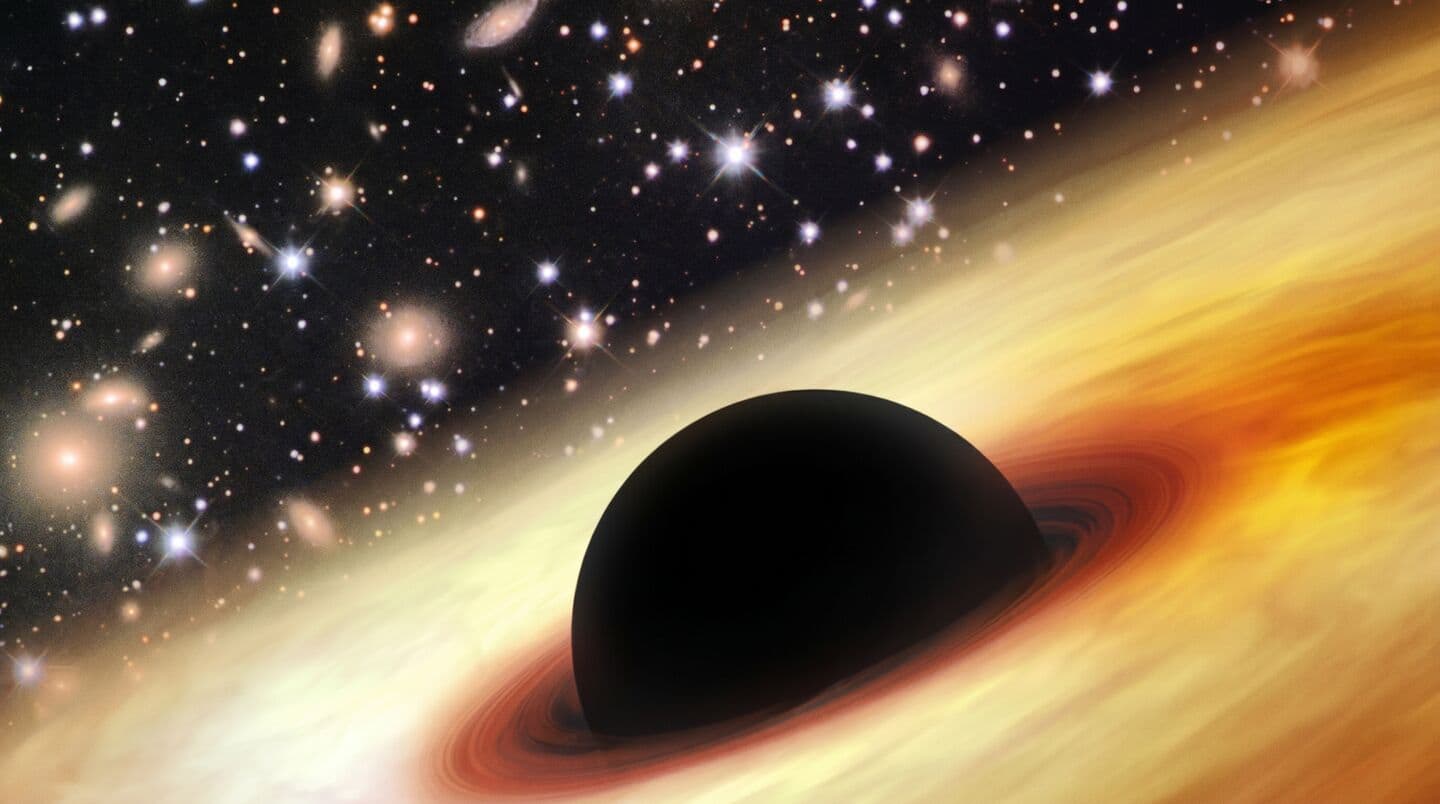
James Webb Space Telescope spots billion solar mass black holes
The James Webb Space Telescope just spotted supermassive black holes, some 1 billion times the mass of our sun, already hanging out within less than a billion years after the Big Bang.
That's way earlier than scientists expected, and it doesn't fit with old ideas that black holes slowly grow from collapsing stars.
Now, researchers think dark matter might be behind this cosmic shortcut.
Decaying dark matter triggers direct collapse
A new study suggests that as dark matter particles decayed in the early universe, they released energy that stopped gas clouds from forming stars. Instead, those clouds collapsed straight into huge black holes.
This "direct collapse" idea could explain how these giants showed up so fast and gives us a fresh look at how dark matter shaped the universe we see today.