James Webb Space Telescope spots probable black hole star glimpse-17775
The James Webb Space Telescope (JWST) just spotted something wild: one mysterious "little red dot" from the early universe appears to be a black hole star.
These are supermassive black holes gobbling up gas and dust, wrapped in thick clouds.
One standout, GLIMPSE-17775, was seen as it looked 1.8 billion years after the Big Bang, giving scientists new clues about the nature of little red dots and the evolution of the universe.
Kokorev study finds black hole evidence
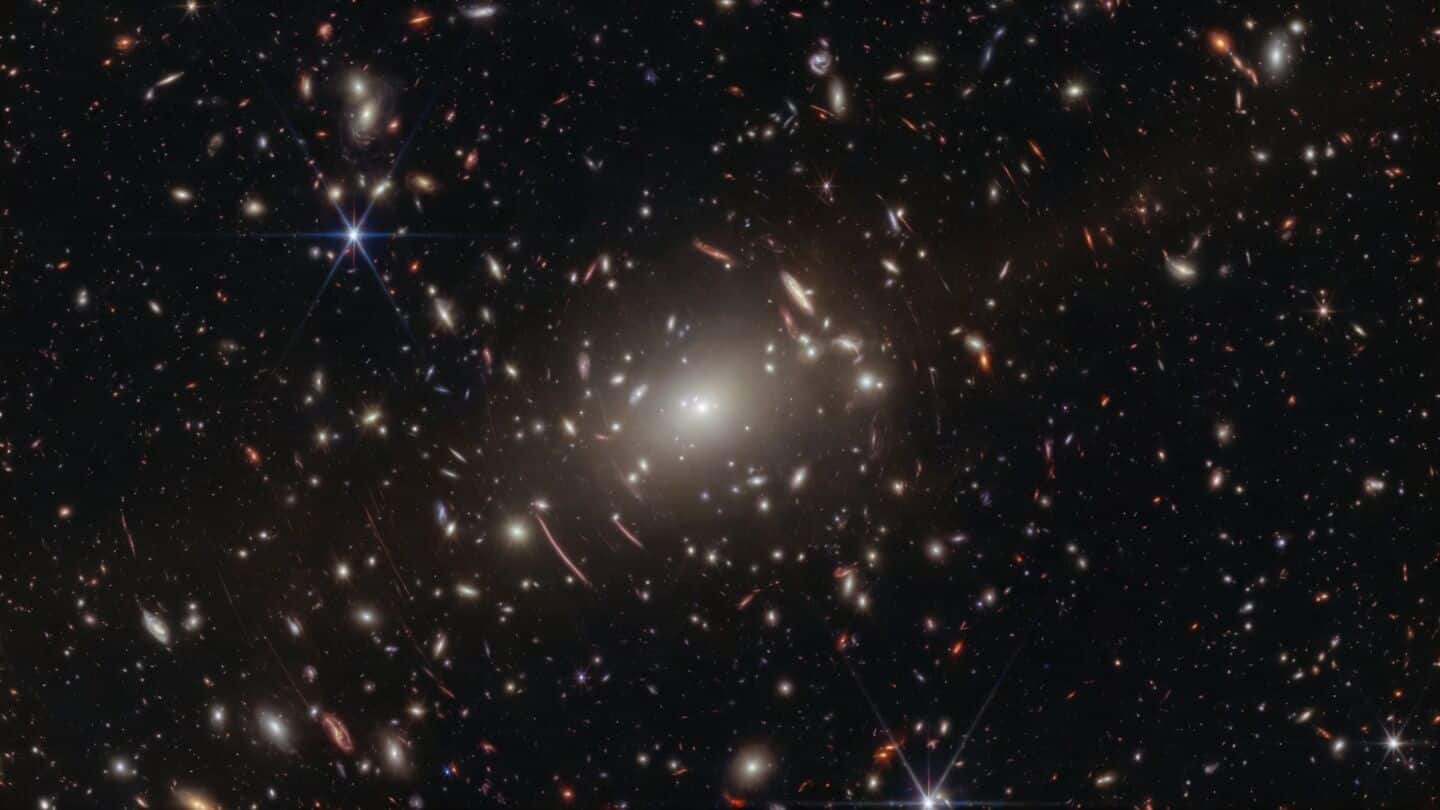
By using a cosmic magnifying glass (gravitational lensing) with galaxy cluster Abell S1063, JWST caught detailed light signatures pointing to a hidden supermassive black hole: think electron scattering, fluorescence, and an "iron forest" of elements.
The study, with Vasily Kokorev at the University of Texas at Austin and published June 10, 2026, gives some of the strongest evidence yet that these black hole stars existed and could help explain little red dots and the evolution of the universe.