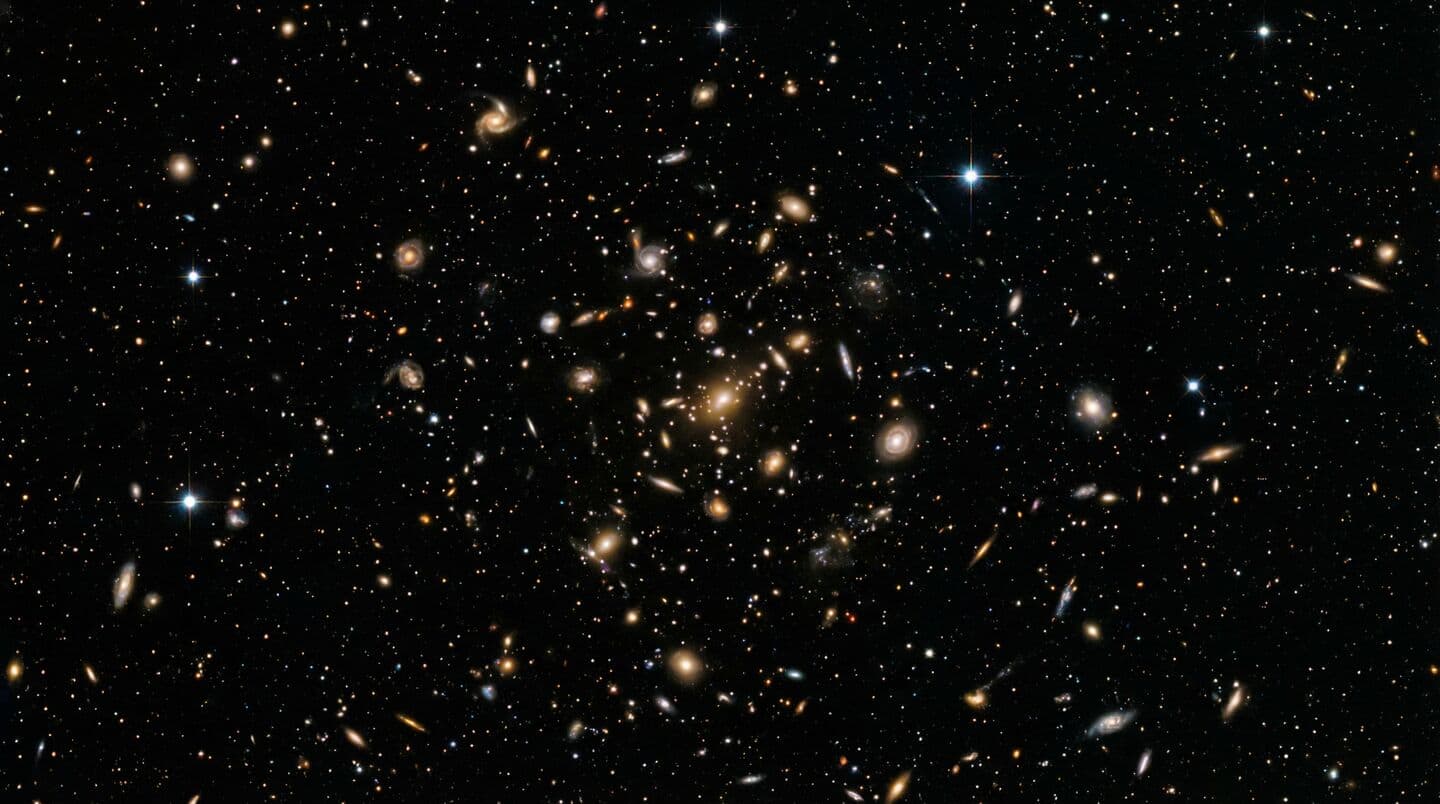
JWST finds mysterious 'little red dots' from early universe
JWST has found 400 to 500 mysterious "little red dots" dating back to the universe's first two billion years.
Scientists think these could be supermassive stars, possibly 1 million times heavier than our Sun, or even early black holes,
many showing hydrogen-and-helium-dominated spectra, while X-ray emission is weak or undetected in current observations, with some models predicting faint X-rays in certain scenarios.
Some might be living giants
A recent study modeled two of these objects and found their odd V-shaped light patterns come from their atmospheres and outer shells.
Lead researcher Devesh Nandal shared, "For the very first time, we think we're not looking at some dead signature of a star," hinting that these might be living giants or something entirely new.
Young black holes forming without supernova explosions
Other teams suggest some "red dots" might actually be young black holes forming without supernova explosions.
Some are wrapped in glowing gas cocoons and are seen within the first two billion years and are not evident at later times.
Future studies could help solve this cosmic mystery
Figuring out what these "little red dots" are could reveal how the very first stars and black holes formed.
Future radio and X-ray studies should help solve this cosmic mystery—and maybe rewrite what we know about the early universe.