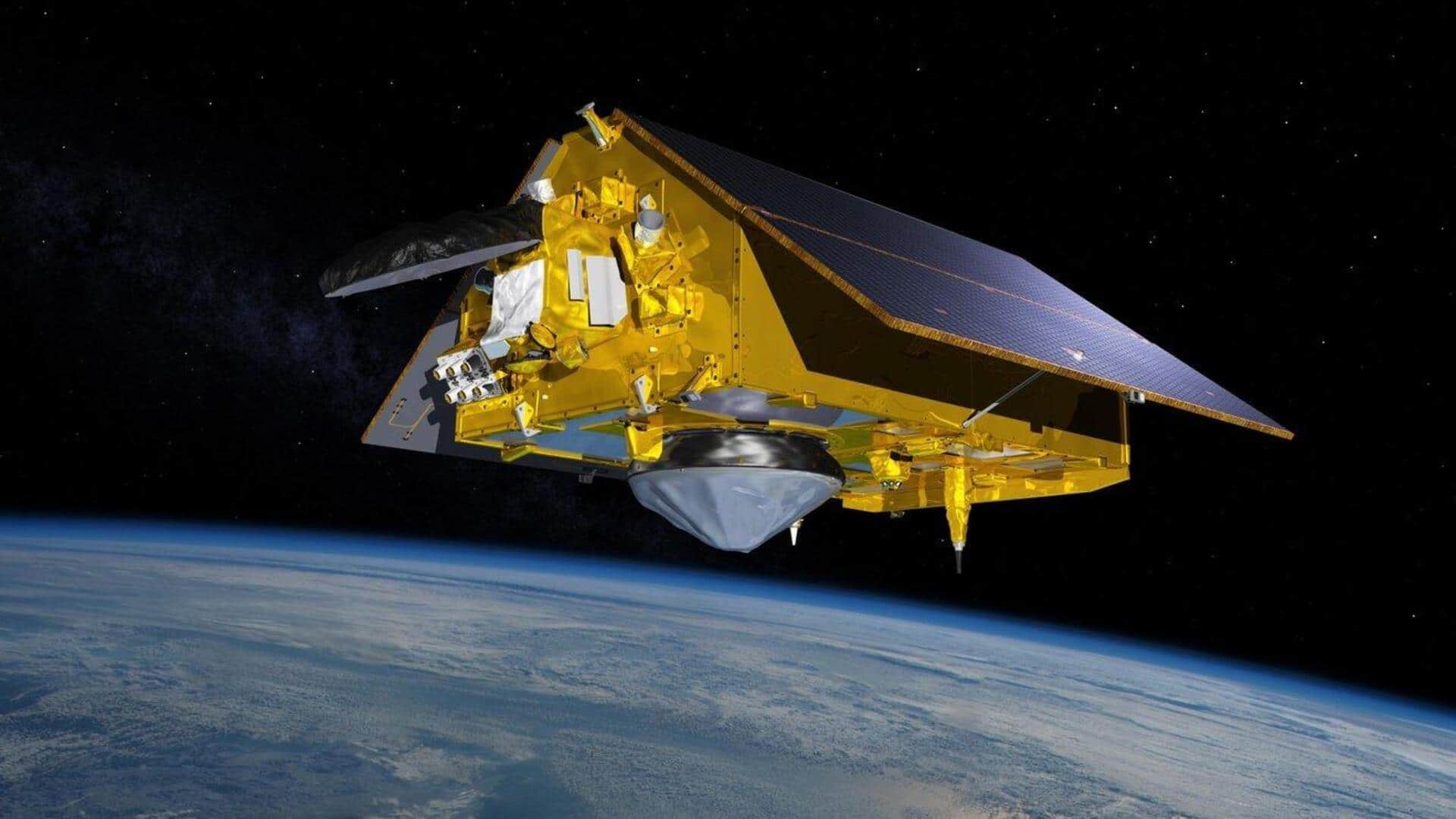
How NASA's billion-dollar satellite will monitor climate change
What's the story
NASA recently launched a new environmental-monitoring satellite, Sentinel-6B, as part of a multibillion-dollar project. The launch was conducted by global partner SpaceX in mid-November. The primary goal of the new satellite is to measure long-term changes in sea levels and atmospheric conditions. It is equipped with advanced radar technology that can gage the height of oceans by sending radar pulses down to Earth and measuring their return time.
Data utility
Sentinel-6B's data will aid in climate change preparedness
The data collected by Sentinel-6B will contribute to a long-term dataset critical for city planners, coastal authorities, and governments. This information is vital for preparing for rising seas, floods, and climate-driven migration.
The satellite will also gather atmospheric data such as temperature and humidity at different altitudes. This information could improve weather predictions and enhance our understanding of global climate change patterns.
Coastal protection
Sentinel-6B: A crucial tool for coastal regions
NASA considers Sentinel-6B as a critical "eyes in the sky" for a safer future of Earth.
The satellite is particularly important in combating the rising threat of floods, cyclones, and rising seas in coastal regions worldwide.
Coastal flooding, tidal surges, and sea-level rise pose major risks to millions living in low-lying areas around the world.
Technological advancement
Sentinel-6B's radar altimeter: A game changer in sea level monitoring
The satellite's high-precision radar altimeter can detect even minor changes in sea level.
This capability is crucial as sea-level rise (due to glacier melt and thermal expansion) threatens hundreds of millions living along coasts.
By "seeing" ocean surfaces globally, Sentinel-6B can help predict long-term trends such as coastal erosion, increasing shorelines, threats to small island states, and greater vulnerability in delta regions.
Planning aid
Sentinel-6B's data will guide infrastructure planning
The data from Sentinel-6B can also inform decisions on infrastructure planning in cities.
It could serve as a guide on when and where to build, how high to raise structures, and which areas may need evacuation or special protection.
Insurance companies, disaster-management agencies, and climate-vulnerable governments are likely to rely heavily on this data for their future plans.