NASA is testing if humans can land spacecraft while dizzy
What's the story
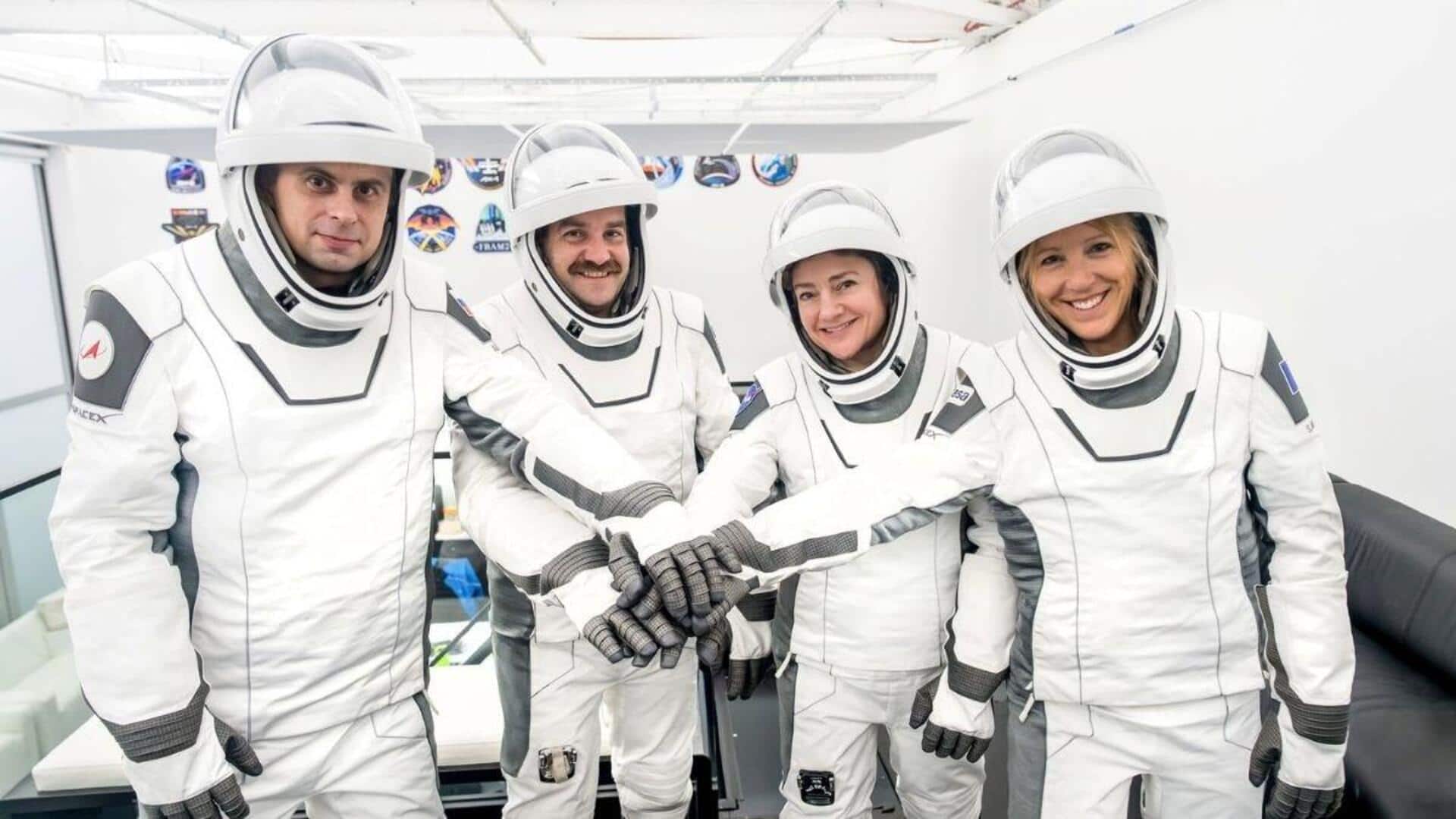
NASA is conducting a unique experiment to see if astronauts can land a spacecraft on the Moon while feeling dizzy. The experiment, being conducted during the SpaceX Crew-12 mission, will help prepare pilots for intense gravity shifts they may experience during lunar landings. The study uses virtual reality to simulate these conditions and test astronaut responses.
Adaptation
Why do astronauts get dizzy?
Astronauts who spend long periods on the International Space Station (ISS) get used to a weightless environment. However, this adaptation poses challenges when they return to a gravity-affected world like Earth or Moon.
The transition can throw their inner ear, which is responsible for maintaining balance, into disarray.
This can create sensations similar to the room spinning or standing on one's head.
Experiment
The manual piloting experiment
To test if a pilot can still operate a multi-billion-dollar spacecraft while feeling this level of motion sickness, NASA is using an advanced experiment called Manual Piloting.
The experiment involves putting astronauts in a high-tech flight simulator with a virtual reality headset.
While still orbiting Earth in zero gravity, they don the goggles and try to land a virtual ship on the lunar South Pole.
Disorientation
The challenges of landing on the Moon
The simulated gravity in the experiment can make astronauts feel extremely disoriented as their brains have adapted to weightlessness.
Scientists want to see if they can ignore this dizziness and use hand controllers to stay on course, or if their shaky balance makes them miss the landing pad entirely.
This study will help understand how much confusion affects a pilot's reaction time or decision-making ability.
Training benefits
Using virtual reality to prepare for real landings
The Crew-12 study also tests the theory that if astronauts practice landing in virtual reality just before leaving the space station, it will prepare their brains for the real thing.
By seeing how well the crew can override and redirect during such dizzy spells, NASA can develop better training programs.
This is crucial as most modern spacecraft land using computers but technology can fail.
Research implications
Determining the future of lunar landings
The Crew-12 study isn't just about success; it's about determining the limits of human ability.
By tracking how often pilots drift off course in the simulation, NASA can decide if future landings should be fully automated or if the humans need special tools to help them see straight.
This research is key to ensuring that when Artemis crews finally reach the lunar surface, a little dizziness won't result in a catastrophic crash.