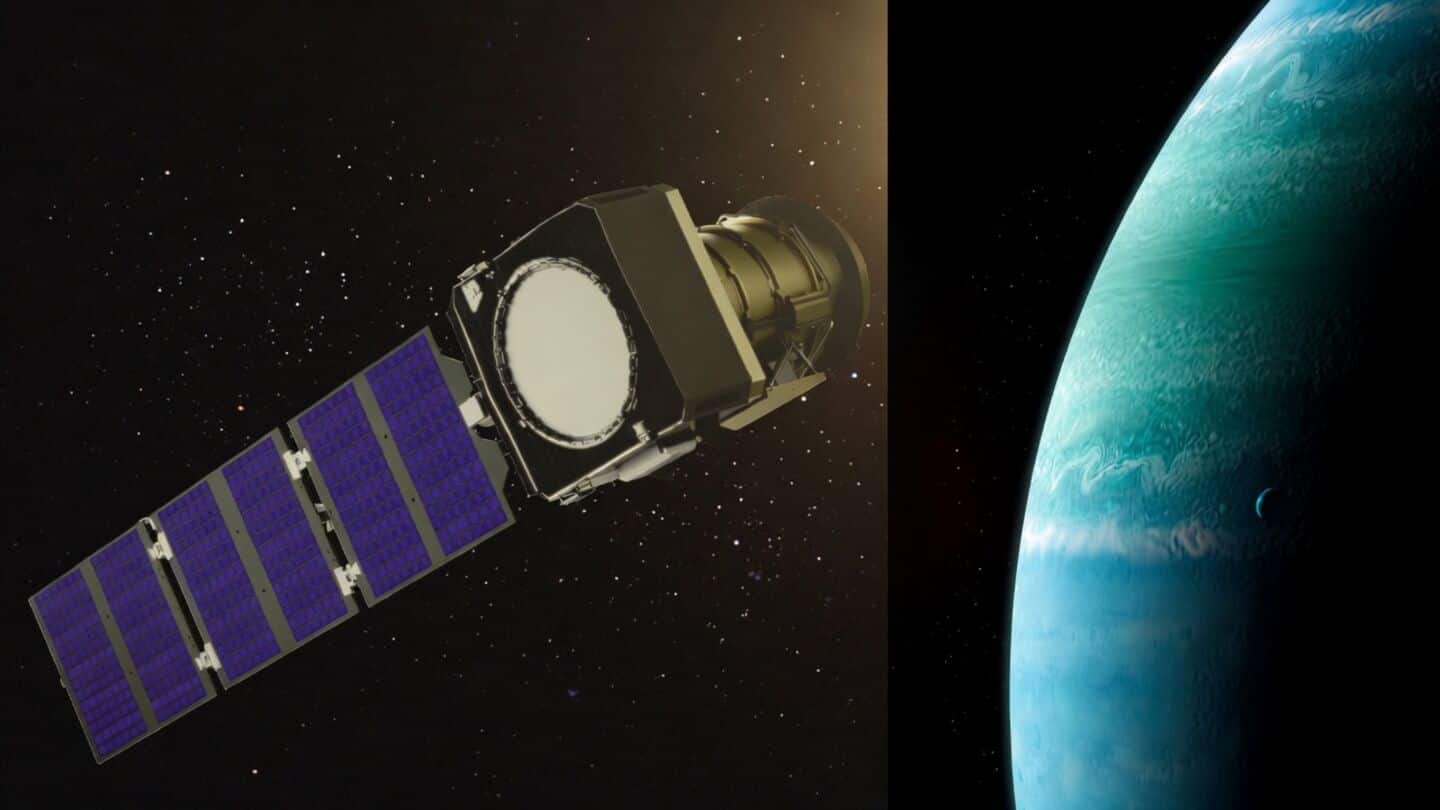
NASA's Pandora satellite to study at least 20 exoplanet atmospheres
NASA's Pandora satellite, launched in January 2026, is now on a mission to study the skies of at least 20 distant exoplanets.
By watching these planets as they pass in front of their stars, Pandora collects starlight that filters through their atmospheres, helping scientists spot signs of water, clouds, and hazes far from Earth.
Pandora aims to separate stellar signals
Pandora tackles a tricky problem: stars can mess with the data by creating signals that look like planet atmospheres.
To fix this, Pandora observes the planet and its host star together, capturing visible and near-infrared light, making it easier to tell what's really coming from the planet.
As NASA's first Astrophysics Pioneers satellite, Pandora also works alongside big names like the James Webb Space Telescope to help us figure out atmospheric signals from these distant worlds, and maybe even in the search for life someday.