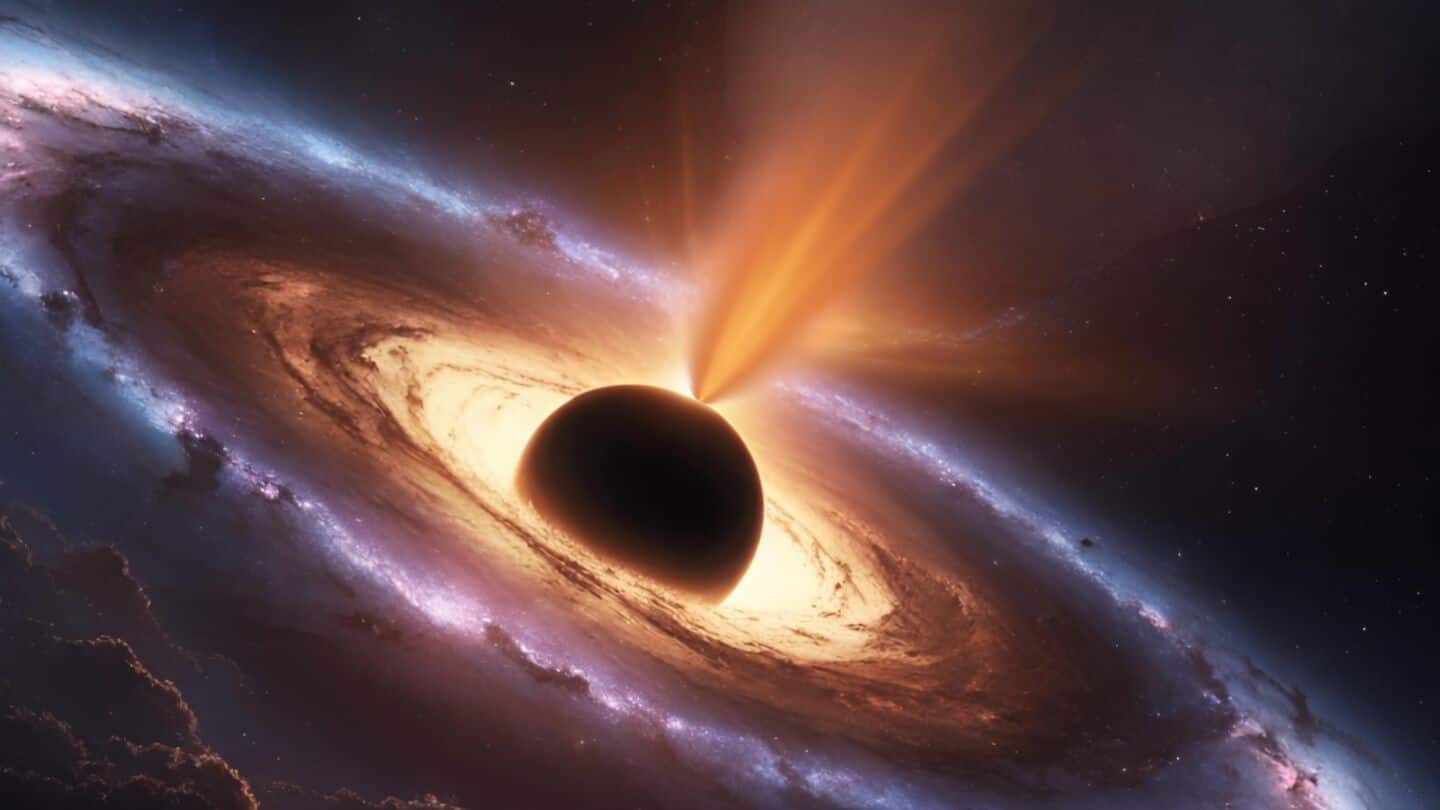
Study finds early black holes 1 to 10 million suns
Turns out, black holes in the early universe aren't as massive as scientists once believed.
Thanks to data from the James Webb Space Telescope, a new study shows these cosmic giants are actually between one and 10 million times the mass of our sun, not hundreds of millions like earlier estimates suggested.
This makes more sense given their small host galaxies and the young age of the universe back then.
Alessandro Trinca study explains faint X-rays
Led by Alessandro Trinca from Italy's National Institute for Astrophysics, the research offers a better fit for how these black holes grew so fast.
The team also figured out why they don't shine with X-rays as expected: thick gas disks form around them during rapid growth, scattering X-rays so they look faint.
These insights help us understand how supermassive black holes evolved when the universe was just getting started.