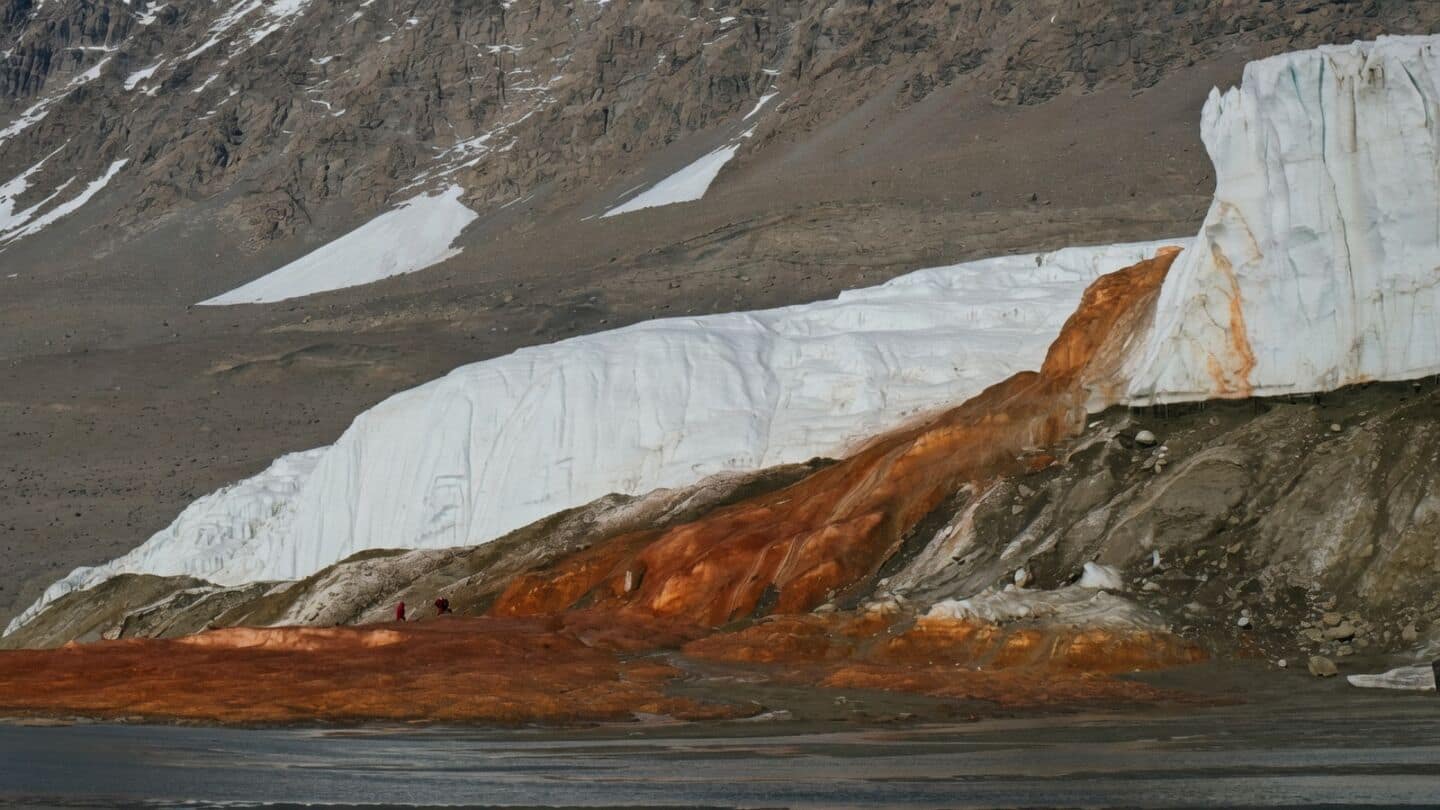
Study finds marine microbes in Antarctica's ancient Blood Falls seawater
Turns out, the famous red waterfall in Antarctica, Blood Falls, is more than just a cool sight.
Scientists have discovered that its vivid color comes from iron-rich brine, which is actually ancient seawater trapped under Taylor Glacier ages ago.
Even more fascinating, a new study published today found marine microorganisms living in this salty water, proving it has real ocean roots.
Blood Falls samples include eukaryotic species
Researchers took more than 160 samples from around Blood Falls and used genetic analysis to check them out.
Most of the microbes they found were marine types—not the usual freshwater or land species you'd expect in Antarctica.
The discovery also included eukaryotic species in the red ice and sediment, backing up the idea that this spot was once part of an ancient ocean.
Study offers adaptation and climate clues
This isn't just about weird Antarctic waterfalls: it gives us a peek into how life adapts to extreme environments and offers clues about Earth's climate history.