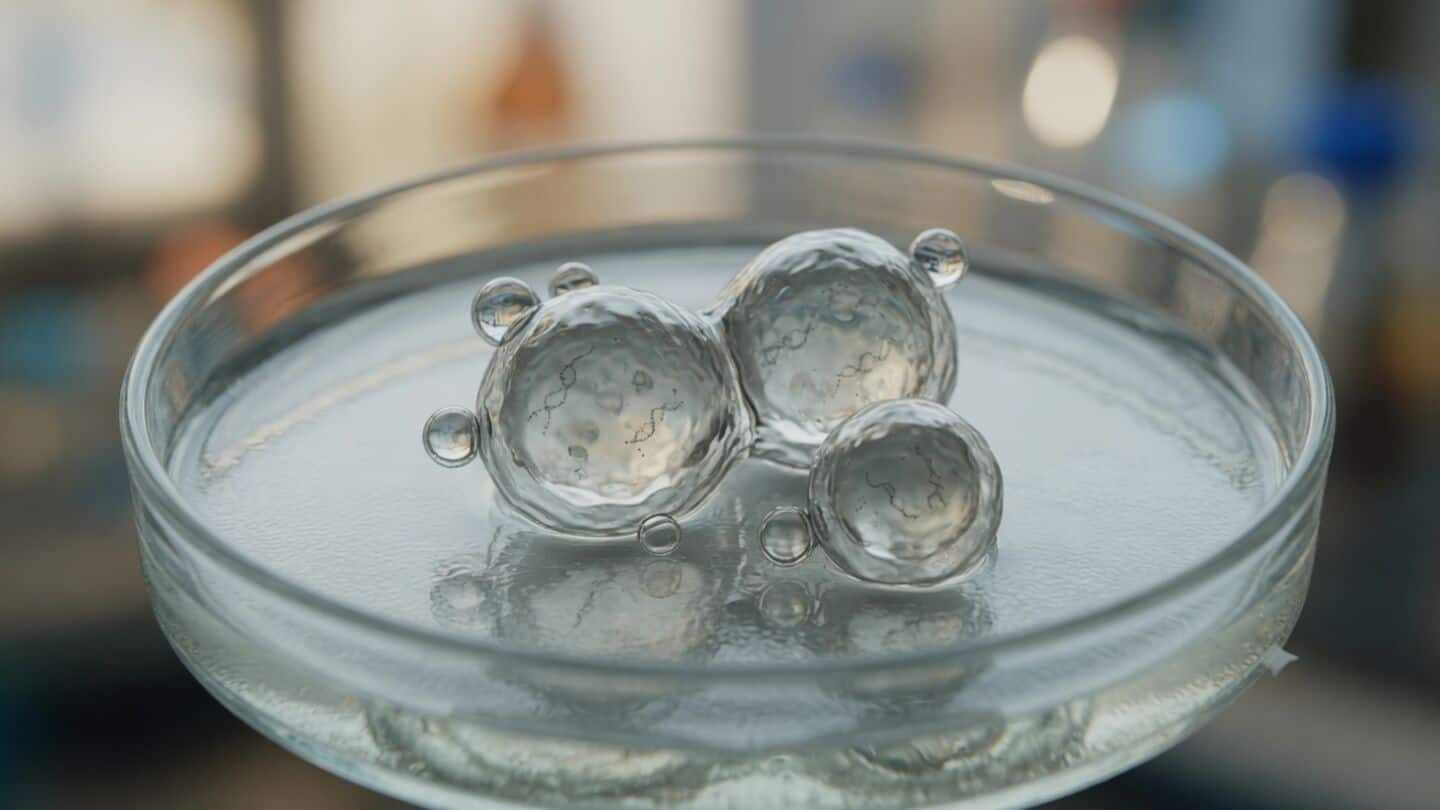
University of Minnesota researchers build SpudCell using nonliving chemicals
Researchers at the University of Minnesota have built a synthetic "cell" called SpudCell that can feed, grow, copy its DNA, and even divide, all using only nonliving chemicals.
Instead of tweaking real cells, they started from scratch with a simple fatty membrane and some clever molecular machinery.
It is a big step toward understanding what makes something act alive.
SpudCell copied itself through 5 generations
SpudCell uses tiny bits of DNA to run its functions and special proteins to "eat" by merging with other bubbles for supplies.
It has managed to go through five generations of copying itself and splitting apart, though it still needs some help from scientists along the way.
The team hopes this stripped-down cell model will unlock new ways to study life's basics, and maybe inspire future advances in biotech or medicine.