These EV makers are destroying indigenous woodlands in Indonesia
What's the story
Volkswagen, Ford, and Tesla are among the electric vehicle manufacturers whose batteries may contain nickel sourced from deforested indigenous woodlands. The revelation comes from an analysis that highlights the environmental cost of producing eco-friendly vehicles. Corporate disclosures and trade flows over the past two years have shown that mines in these companies' battery supply chains are associated with tree loss in Sulawesi, Indonesia.
Environmental impact
Tolaki people's land devastated by mining activities
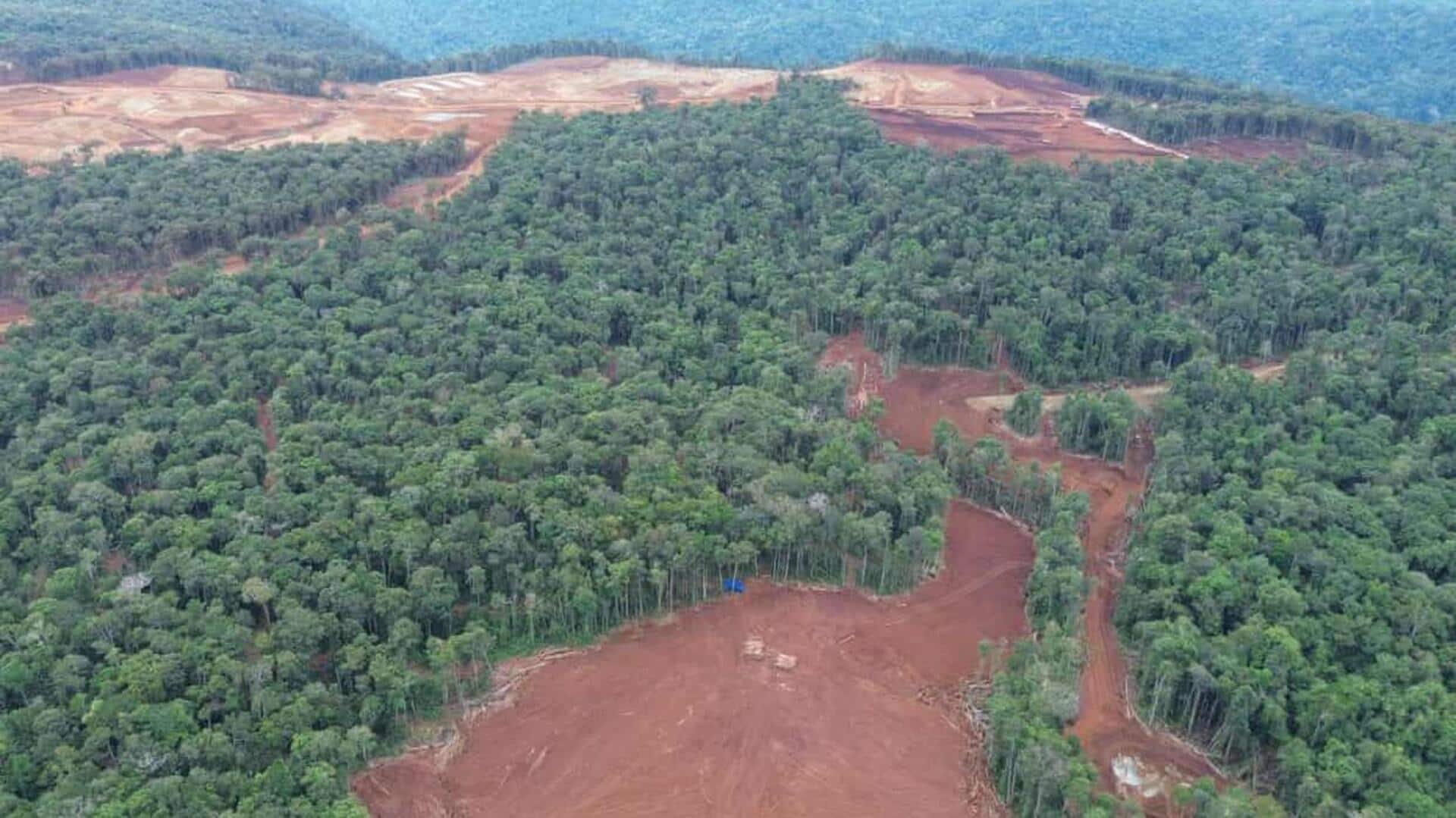
The nickel-rich lands of Sulawesi, home to the Tolaki people, have been severely affected by mining activities.
The metal is widely used in car batteries due to its ability to increase energy density and range.
However, satellite analysis has shown that these mines have resulted in extensive deforestation of primary rainforest.
Wadimula, a Tolaki elder, lamented the destruction of their forest as equivalent to destroying their own life.
Corporate connections
Ore traced to carmakers through Huayou, CATL, LG
The investigation traced ore from the Cahaya and Hengjaya mines through regional smelters and Chinese processing plants to Zhejiang Huayou Cobalt.
The cathode manufacturer supplies CATL, the world's largest battery maker.
Corporate reports from Huayou list US and European carmakers as end-users.
Further corporate documents and trade data reveal another route from Huayou to LG, a South Korean group supplying battery products to leading carmakers via Poland.
Trade routes
Huayou's Morowali plant shipments to China
Ore from the two mining concessions is sent to a nickel smelter in Morowali, Indonesia, operated by Huayou's local subsidiary.
Here, limonite is refined into mixed hydroxide precipitate, the main raw material for battery cathodes.
In 2024 and 2025, $606 million and $470 million worth of this mixed hydroxide precipitate was shipped from the Morowali plant to ports in China.
The ore was then transported overland to Huayou cathode manufacturing sites near Shanghai and Vietnam border.
Industry connections
Other carmakers linked to Huayou
The investigation found that Volkswagen's plant in Braunschweig received a shipment of 24 tons of cell modules worth about $390,000 in October 2024.
Other carmakers identified as end-users or recipients of shipments from Huayou and CATL include Volvo, General Motors, BMW, Stellantis, Hyundai.
Mercedes-Benz was also separately linked to Huayou.
Corporate responses
Car manufacturers say they do not source nickel directly
Many of the carmakers involved have said they do not source nickel directly and that they assess and mitigate adverse impacts.
They also require suppliers to comply with responsible sourcing standards.
However, they have not shared results from on-site audits.
Volkswagen, Europe's leading manufacturer, said it takes potential risks in its supply chain very seriously but cannot disclose specific details due to contractual obligations with business partners.