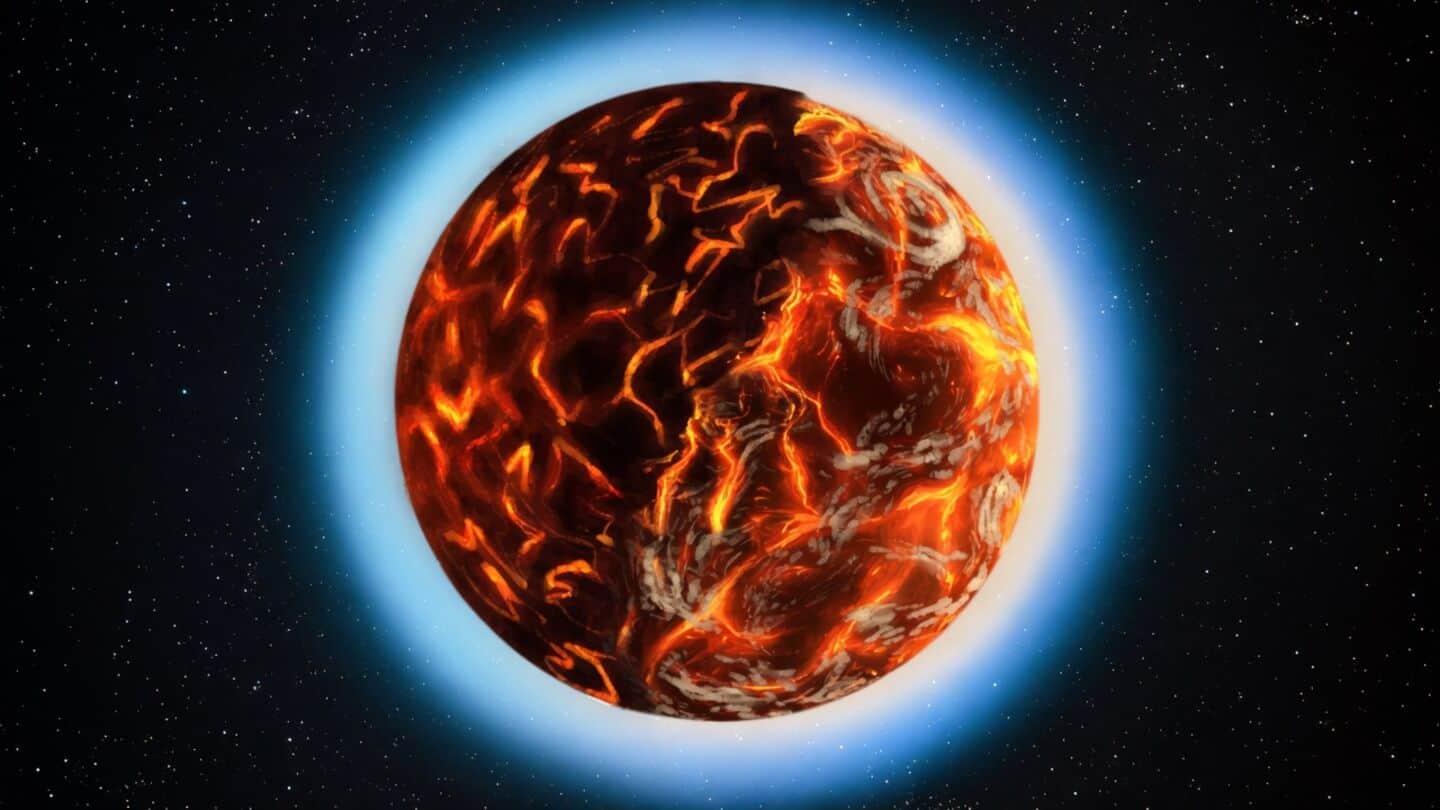
Arizona State University study suggests rock-vapor clouds and magma oceans
A new study from Arizona State University suggests that some distant planets called sub-Neptunes are covered in thick clouds made of vaporized rock, with super-hot magma oceans below.
These worlds are bigger than Earth but smaller than Neptune, and we don't have anything like them in our solar system.
Sub-Neptunes' heat-trapping clouds could melt surfaces
Sub-Neptunes could have heavy atmospheres full of hydrogen, plus possible traces of water vapor and other carbon-based organic molecules.
The study found that minerals like aluminum oxide can form heat-trapping clouds, pushing temperatures high enough to melt the surface into a sea of magma: think thousands of degrees.
NASA's James Webb Space Telescope even spotted metallic vapors on one called GJ 1214b, hinting at a molten world beneath its cloudy skies.
All this extreme heat means these planets probably aren't great spots for life as we know it.