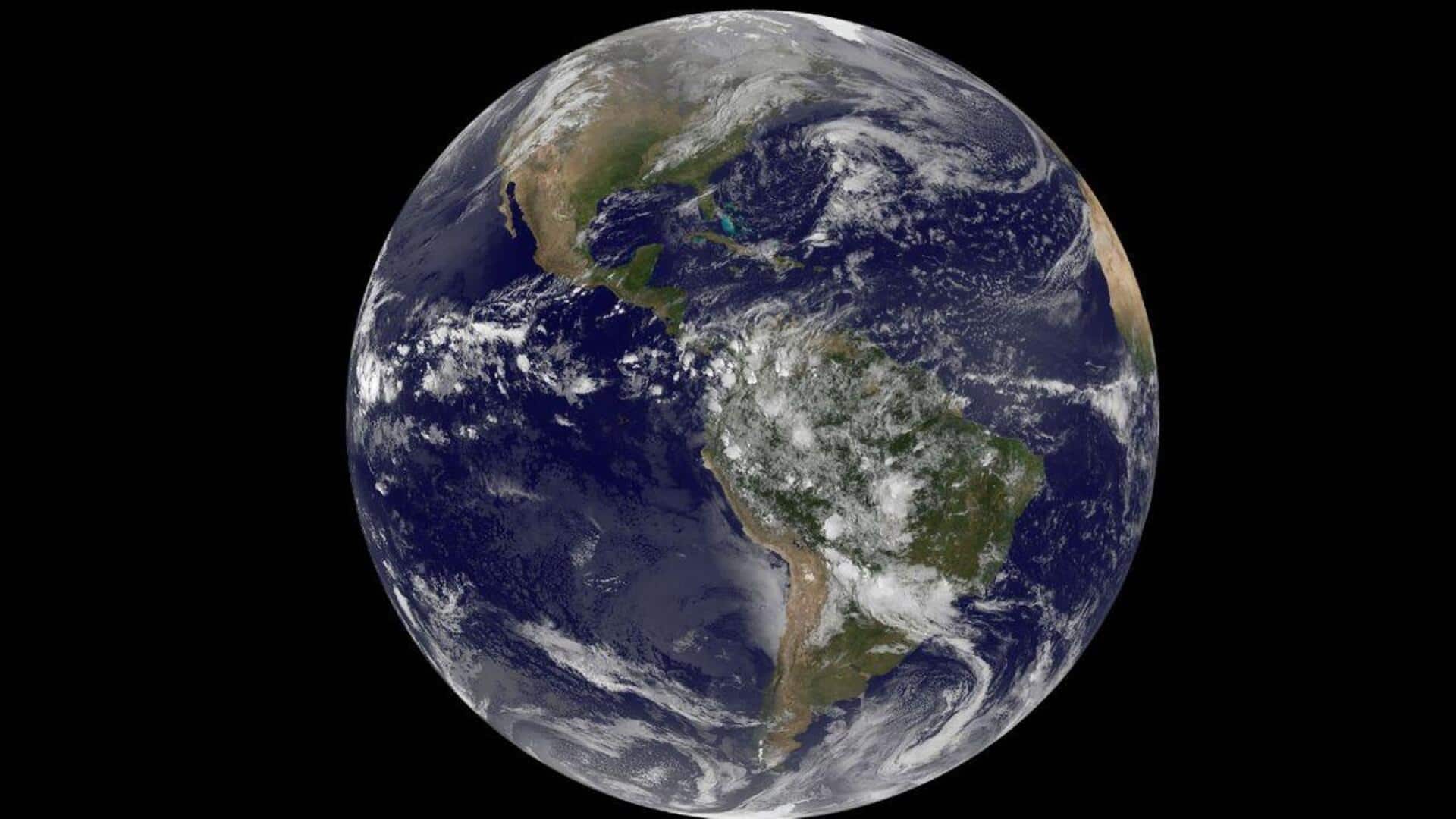
Did you know? Earth has a tail like Mercury
What's the story
Like Mercury, our planet Earth also has a tail. However, unlike the tails of comets and other celestial bodies, Earth's tail is formed by its magnetic field, or magnetosphere. This magnetotail extends at least two million kilometers into space on the dark side of our planet. The phenomenon has been studied by NASA scientists examining Earth's interaction with solar wind.
Protective barrier
Earth's magnetotail: A shield against solar wind
The magnetosphere, or magnetic field of Earth, plays a crucial role in protecting our planet from the solar wind.
It dominates the behavior of electrically charged particles in space near Earth, and traps electrified gas called plasma.
Some of this plasma extends into space, forming Earth's tail.
The phenomenon is called "magnetotail," which gets its name from its resemblance to a teardrop shape with a compressed head on the day side and stretched tail on the night side.
Tail length
Earth's tail extends up to 1,000 times its radius
The exact length of Earth's tail is still not fully understood. However, scientists estimate it could extend up to 1,000 times Earth's radius.
The European Space Agency has confirmed that the magnetotail stretches to at least two million kilometers into space on the night side of our planet.
This discovery highlights the complex interactions between Earth and solar wind, furthering our understanding of space weather phenomena.