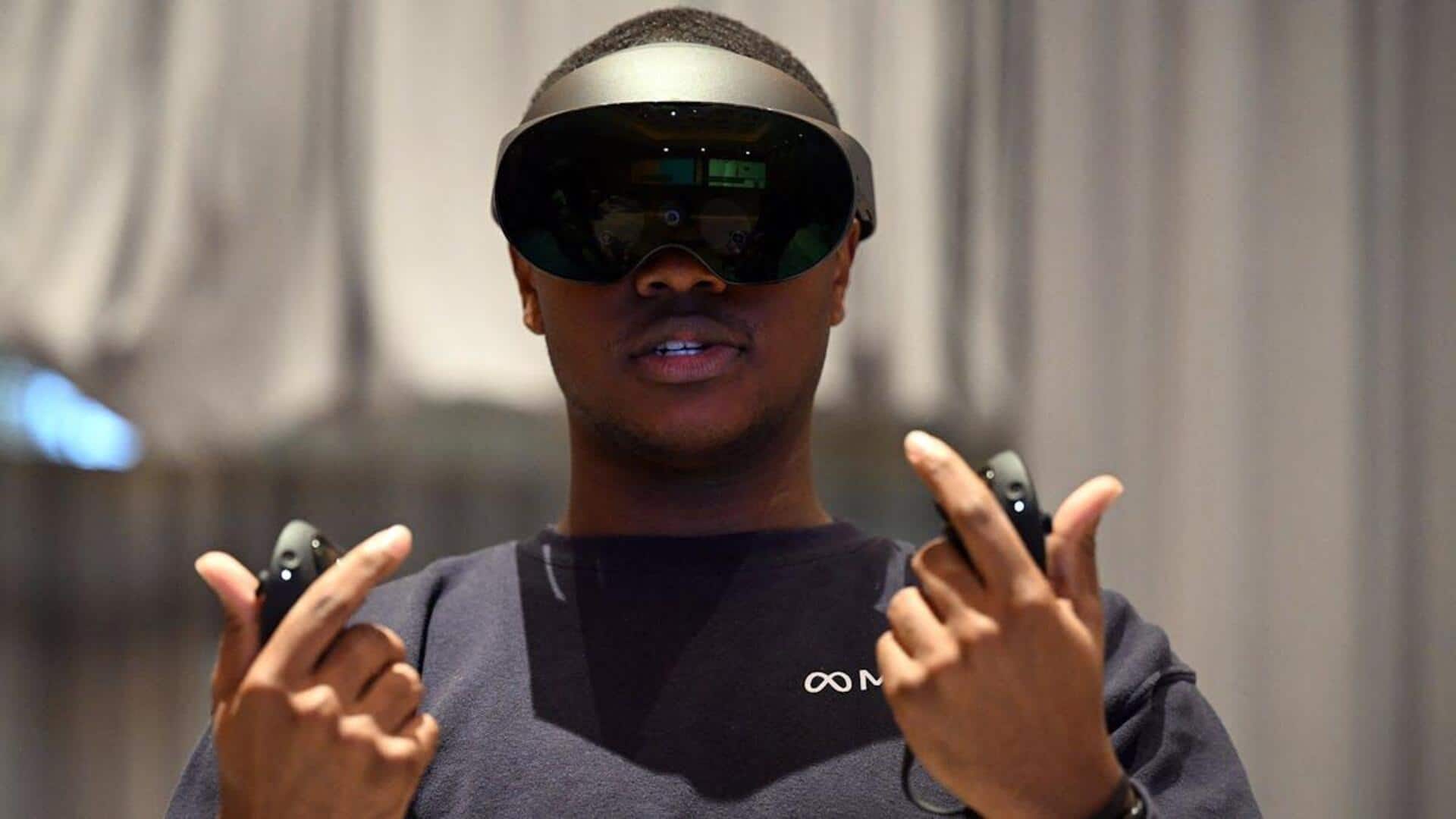
Meta's 'Phoenix' mixed reality glasses will be launched in 2027
What's the story
Meta has pushed back the release of its highly-anticipated mixed reality (MR) glasses, codenamed "Phoenix," to early 2027. The decision comes as part of a broader reassessment within Reality Labs, Meta's division for metaverse and hardware projects. The delay gives engineers more time to refine the product and ensure a seamless user experience.
Timeline adjustment
Internal communication reveals shift in project timelines
Internal communications obtained by Business Insider reveal that the launch of Phoenix has been delayed by nearly a year from its initial 2026 timeline.
The decision comes after Reality Labs was asked to revisit its project timelines and budgets.
During a recent meeting with CEO Mark Zuckerberg, senior leaders were advised to prioritize sustainability and quality over speed in their work.
Plan adjustments
Teams to adjust plans, avoid adding features
In light of the recent discussions, several teams will have to revise their plans and timelines.
Maher Saba, VP of Reality Labs Foundation, warned that, "extending timelines is not an opportunity for us to add more features or take on additional work."
This suggests a more focused approach toward project completion rather than expanding scope or adding new elements at this stage.
Product details
Phoenix's design and functionality
The Phoenix is a goggle-like headset that connects to a puck-shaped external module for extra processing power.
The accessory was kept to make the headset lighter and prevent overheating, despite some internal debates over its inclusion.
Employees who have seen the latest prototypes say it looks like Apple's Vision Pro but is less bulky and more comfortable for long-term use.
Financial impact
Reality Labs faces budget cuts amid project delays
Reality Labs, which has spent more than $70 billion since 2021, is now facing budget cuts of up to 30%.
The reductions are likely to affect teams working on Horizon Worlds, Meta's social virtual environment, and its AR/VR hardware units.
Despite the financial constraints and project delays, Meta remains committed to its vision for the metaverse and continues investing in AI wearables.